Accessible Science Talks at Norwich Research Park
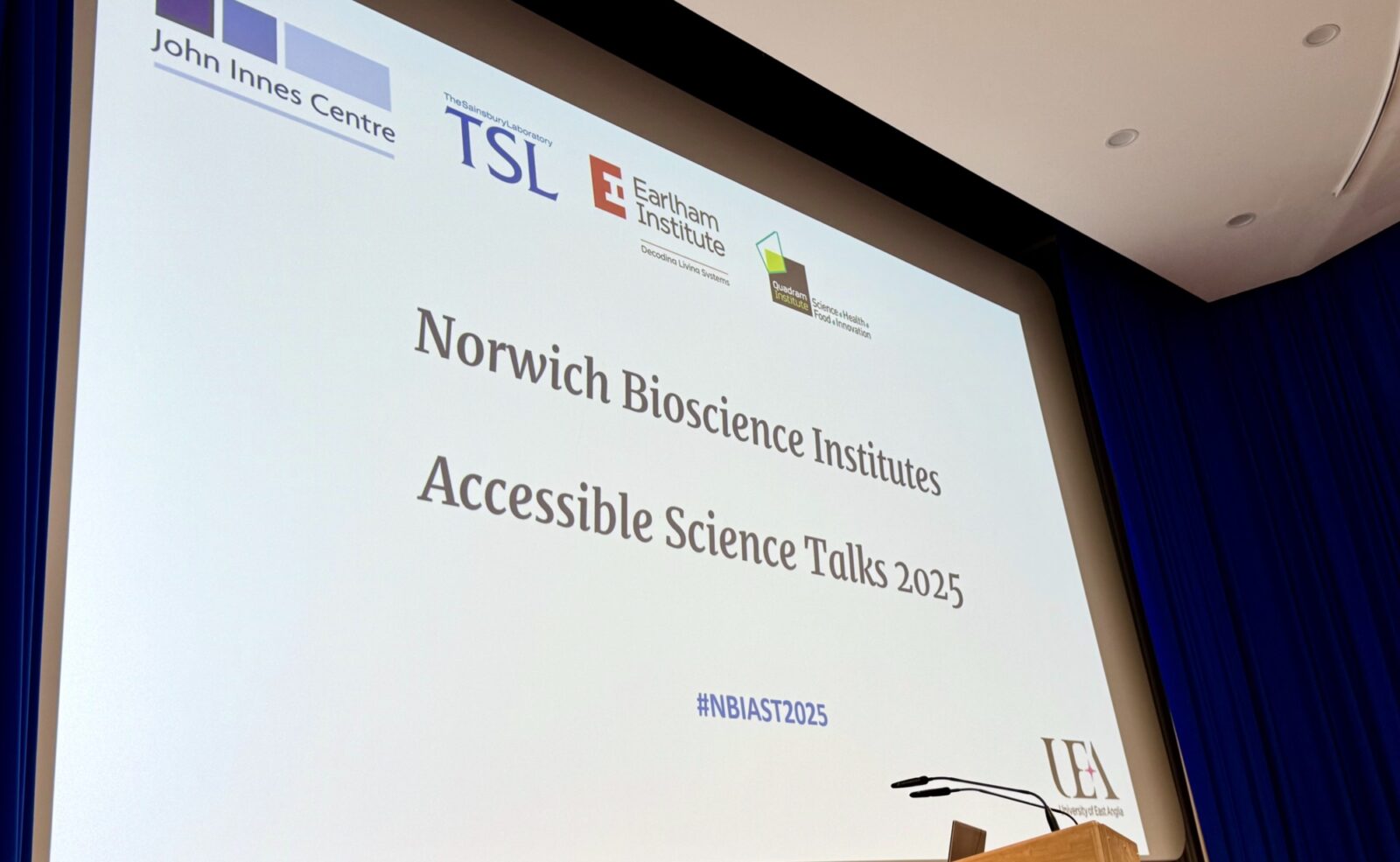
This year's edition of the NBI Accessible Science Talks strived to make our science accessible to a wider audience and promote technical careers in science. The Sainsbury Laboratory had a fantastic time participating and particularly enjoyed the keynote on a topic we're all passionate about... plant education!
By Laura Turchi and Mia Cerfonteyn
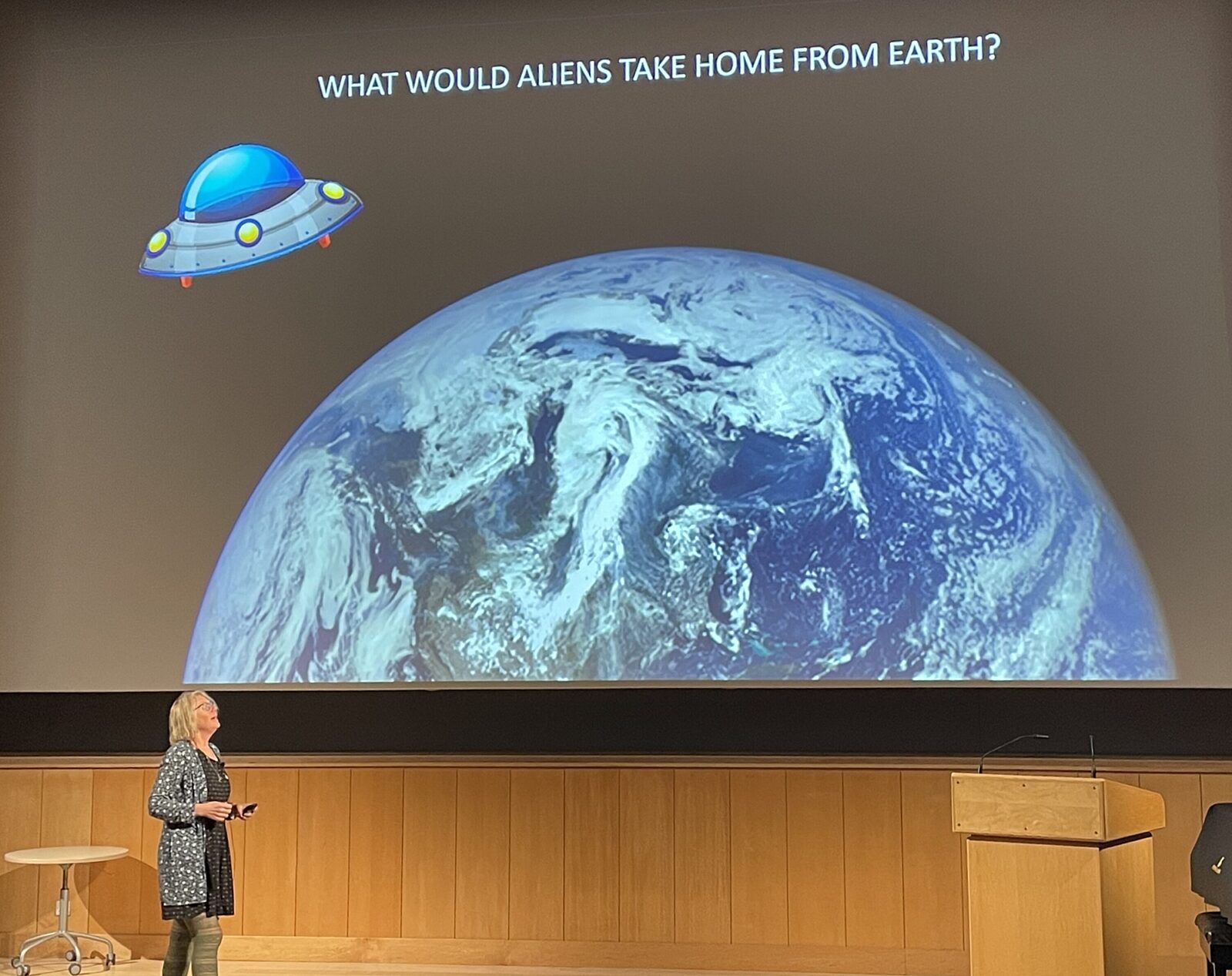
Mary William started her keynote talk with a question to the audience: "What would aliens take home from Earth?"
The answer may surprise you...
The NBI Accessible Science Talks are a much-anticipated cross-institutional event that brings together and fosters collaboration between the four Norwich Biosciences Institutes: The Sainsbury Laboratory (TSL), Earlham Institute, John Innes Centre and Quadram Institute.
This annual event is organised by research support staff and aims to share the exciting science carried out at the four research institutes in a way that is accessible to non-specialists. Students participate with their teachers, online or in person, ensuring the event reaches beyond the Norwich Research Park.
This year we were delighted to welcome our neighbour, the University of East Anglia, and the online event was accessible to a wider public. Science is a fascinating subject whether you're in school or just a curious person.
The lineup of talks was as exciting as ever!
From flowers to... outer space
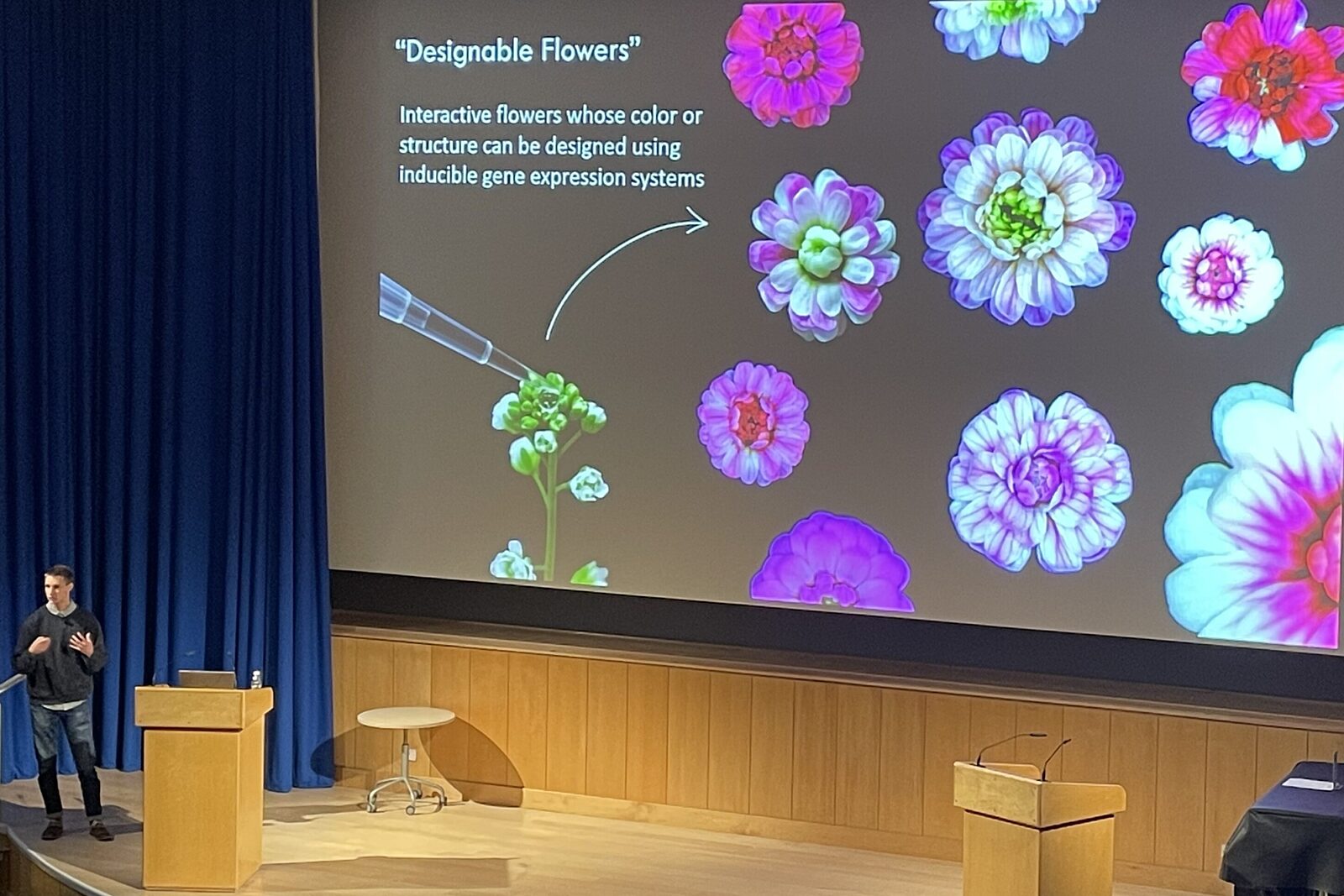
Nick Desnoyer brings together plants, biotech and art in his Open Flower project.
TSL postdoc, Nick Desnoyer presented his Open Flower project, which aims to design beautiful Arabidopsis flowers in a variety of colours and patterns. He wants to create a nonprofit to use Arabidopsis as a teaching tool for future scientists, with the added bonus of sharing the beauty of these living creations.
Building on the important topic of plant science education, keynote speaker, Dr Mary Williams, followed with her talk "What would aliens take home from Earth?"
Her answer? Plants (surprise!)
Mary is an experienced and passionate educator, who spent over a decade working as a Biology professor at a primarily undergraduate institution in California. She then became Features Editor of the journal Plant Cell, where she developed Teaching Tools in Plant Biology. Her passion lies in helping students of all ages to understand plants and plant science research.
In her plenary talk, Mary gave an overview of why plants are crucially important, taking us on an evolutionary journey where photosynthesis transformed our atmosphere into what it is today, creating favourable conditions for animals to conquer land, and eventually for our own species to evolve.
Her inspiring talk covered detailed photosynthetic reactions but also plant physiology, evolution and development, weaving all these concepts together to underline what exceptional organisms plants are.
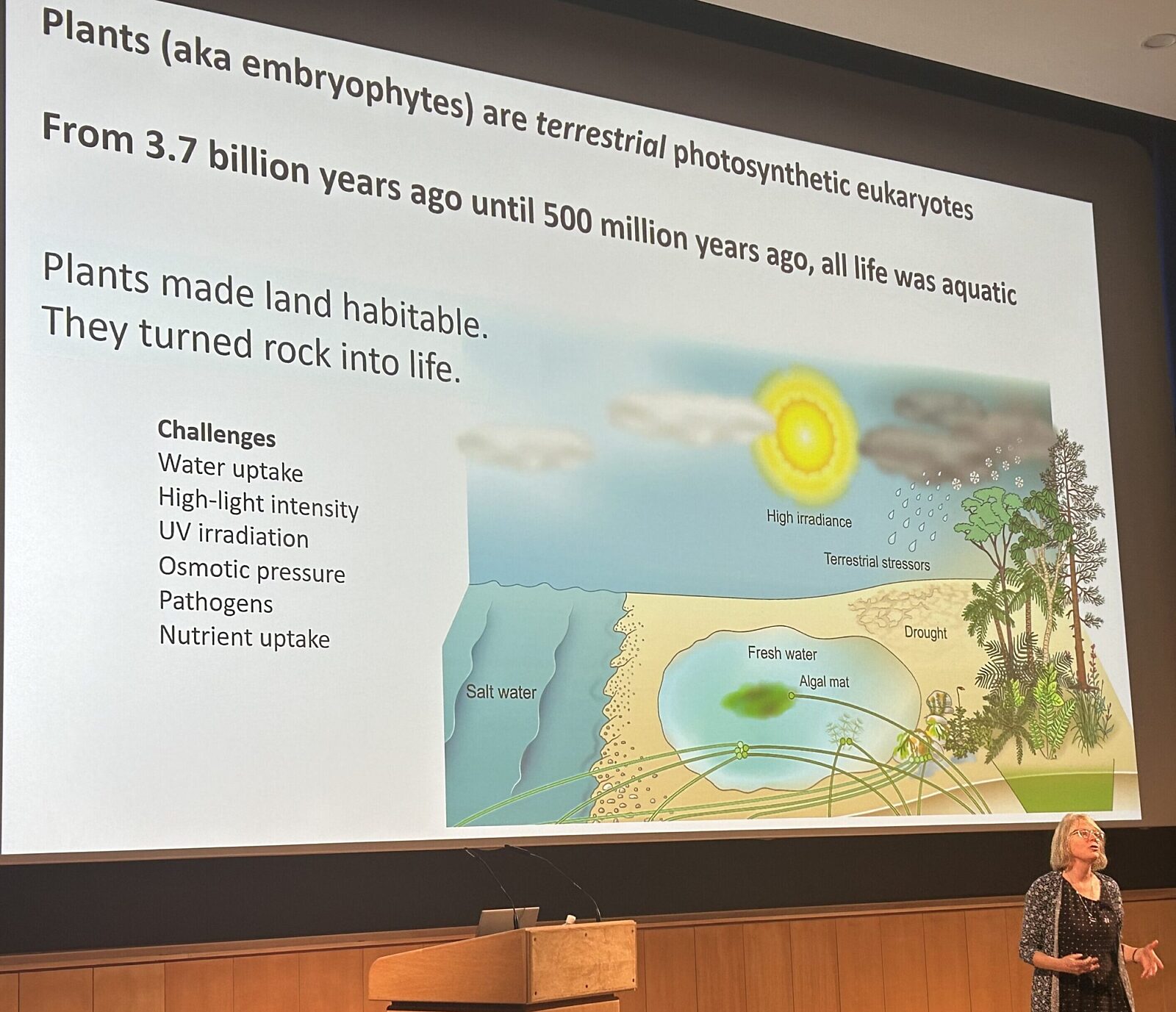
Mary Williams explaining the importance of plant evolution during her plenary talk at the NBI Accessible Science event.
Mary ended her talk with a strong message: "Go work in plant research because it's one of the most important things you can do with your life right now".
She highlighted the importance of studying plants because of their central yet fragile position in a changing world, where they are exposed to progressively harsher conditions and pathogens.
At TSL, we wholeheartedly agree with her - this is what drives our staff and students to study plant pathogens and work towards the development of disease-resistant plants.
Technical careers in science
Each talk was as much about science as it was about careers in science, with speakers presenting the path that had led them to Norwich.
Some went through a linear path, while others followed a winding road full of sharp turns. Many people at TSL have had all but a linear path in their career, as they have shared in their interviews, and that contributes to the diversity that helps our laboratory thrive.
Adeline Harant, Senior Research Assistant in the Kamoun group and co-organiser of the NBI Accessible Science Talks, shared her story in a recent interview. She had always dreamed of becoming a group leader and building her own research team, but over time she realised that what truly makes her happy is to help other people in the lab. As a Senior Research Assistant, she runs experiments and supports colleagues in achieving their goals, while making sure everything goes smoothly in the lab.
Besides talks, we also had interactive stands where research support staff could share their work with colleagues and curious visitors. Our Genomics Platform Lead, Louise Chappell-Maor prepared a stand to present her project, TSL-PLEX, and showcase the tools she uses in the lab. These include a robot that she can program to transfer incredibly small volumes of liquid in hundreds of tiny wells in just a few seconds, which grabbed the attention of many young visitors.
At the same stand, our HR Manager and T-Level ambassador, Kim Wood, engaged with students and teachers to discuss T-levels, hands-on degrees that include over 300 hours of work experience. TSL has hosted a number of T-level students in lab support and IT, some of whom are now employed at TSL.
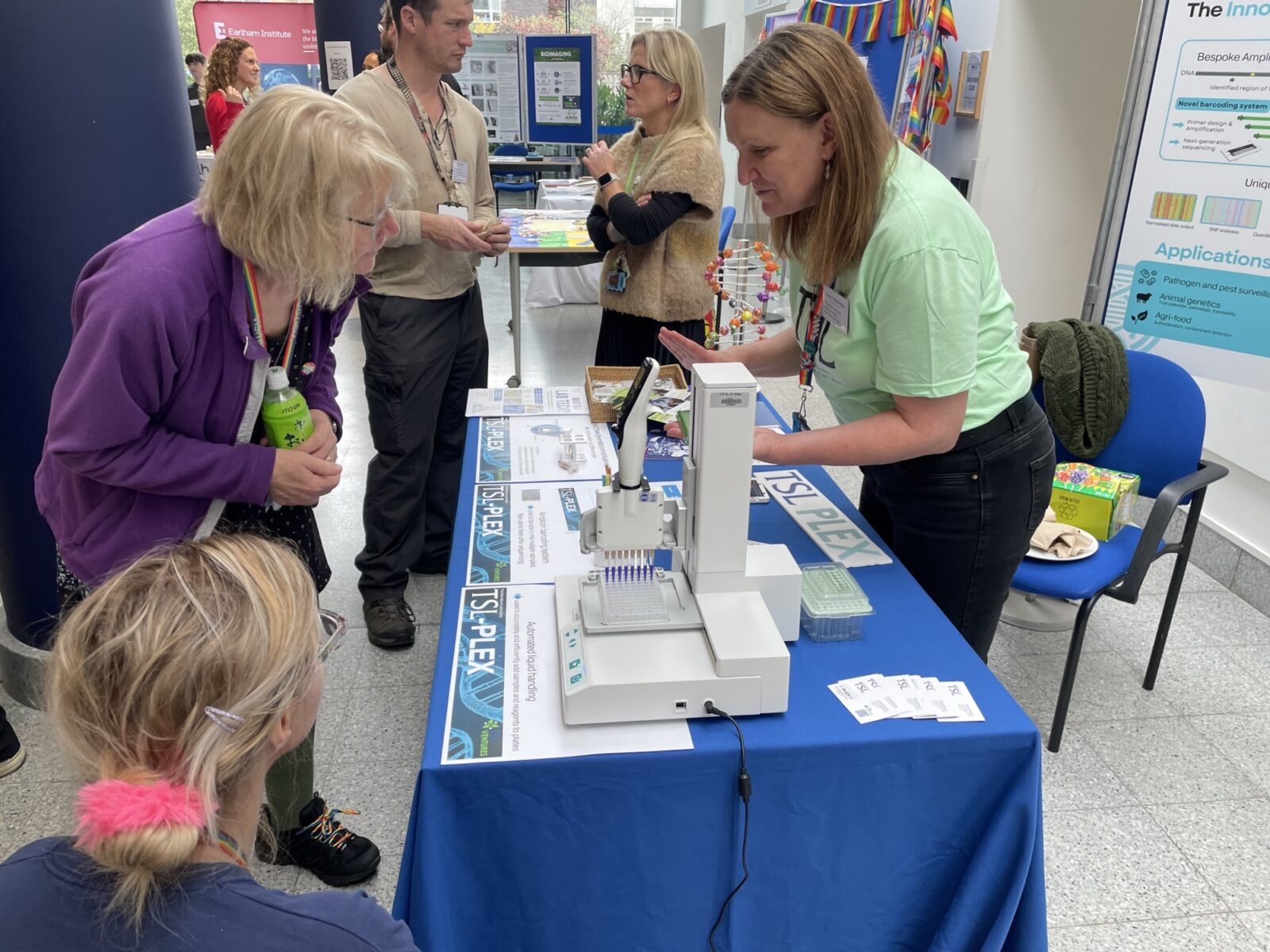
Kim and Louise at the TSL stand, presenting T-levels and TSL-PLEX.
All in all, this year's Accessible Science Talks were incredibly successful, with hundreds of people joining online and in person.
We are grateful to Dr Andrew Breakspear for spearheading organisation efforts with help from all institutes and UEA, and we thank all organisers and participants for making this edition of the NBI Accessible Science Talks so special.