Ancient oomycete honors Sophien Kamoun
Sophien Kamoun, group leader at The Sainsbury Laboratory, has been celebrated in the most enduring way possible: a newly discovered fossil species has been named in his honour.
By Laura Turchi and Mia Cerfonteyn
Welcome, Kamounia striata!
Christine Strullu-Derrien, a paleontologist affiliated with the Muséum national d’histoire naturelle in Paris and the Natural History Museum in London, has led an international effort to identify Kamounia striata, a beautifully preserved fossil oomycete (fungus-like microorganism) discovered in the Grand’Croix Chert of France. This find is particularly significant as the oomycete fossil record is notoriously sparse.
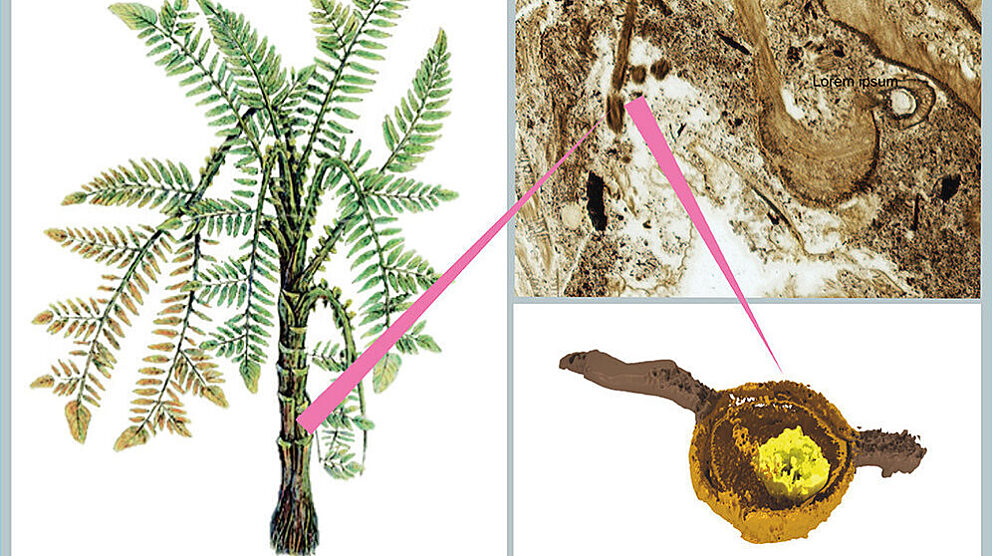
Image from the paper: "A new occurrence of saprotrophic oomycetes from the ca 307–303 million-years-old Grand’Croix Chert (Massif Central, France)" Strullu-Derrien et al. (2026)
Why the Name?
According to the authors, the genus name Kamounia recognizes Sophien's transformative impact on the fields of genomics and molecular biology, specifically in revealing the evolution of pathogenic fungi and oomycetes.
However, Christine shares that the decision to name this new discovery after Sophien has a bit of backstory as well.
“I thought, ‘One day, when I have a fossil oomycete, I will name it after him.’”
Christine and Sophien met years ago in London, when he gave a talk at the Linnean Society. After being introduced by a colleague, Christine immediately realised they had “a French connection, because Sophien did a part of his studies in Paris – so we began to discuss half in French, half in English.”
According to Christine, Sophien gave “an impressive and very accessible talk about his work. It was easy to understand even for people unfamiliar with molecular techniques. Then we discussed about fossils, and he was so interested in my work that he came to the museum to see the material I worked on.”
In 2014, Christine co-organised a New Phytologist workshop about the Origin and evolution of plants and their interactions with fungi that Sophien joined, which gave them one more chance to meet.
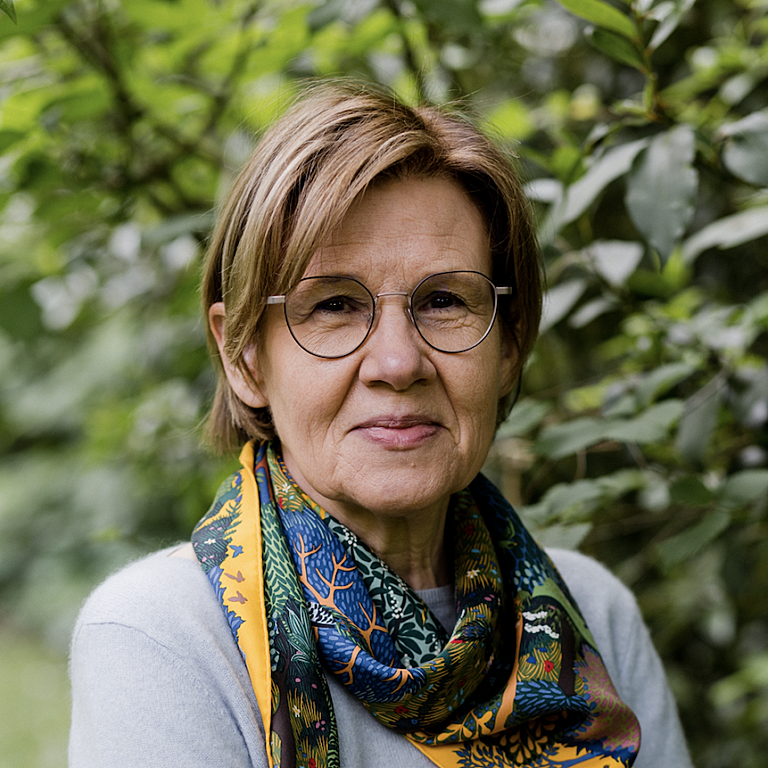
Christine Strullu-Derrien, paleontologist and lead author
“As a researcher working on the origin and evolution on microorganisms, including oomycetes, I am aware of the importance of Sophien’s work on oomycetes, and more generally of his group's research in the modern world. I really appreciate that Sophien is very open minded and very enthusiastic about fossils. It's nice to see people working on the molecular side that are supportive of fossils, not all of them are.”
Despite never working directly with Sophien, his impressive contributions to the field and genuine interest in her work left a lasting impact.
“After that workshop I thought, ‘One day, when I have a fossil oomycete, I will name it after him.’ It’s taken a few years, but I’m glad it's finally happened!”
Sophien said: “I’m really touched by Christine’s gesture, and I’d like to thank her again. What’s funny is that ‘kamounia’ is a famous dish in Tunisia, so she’ll have to come over to Tunis and we’ll cook one for her!”
From beetle species to oomycete genus
Did you know that this isn’t the first time Sophien Kamoun has been taxonomically honoured?
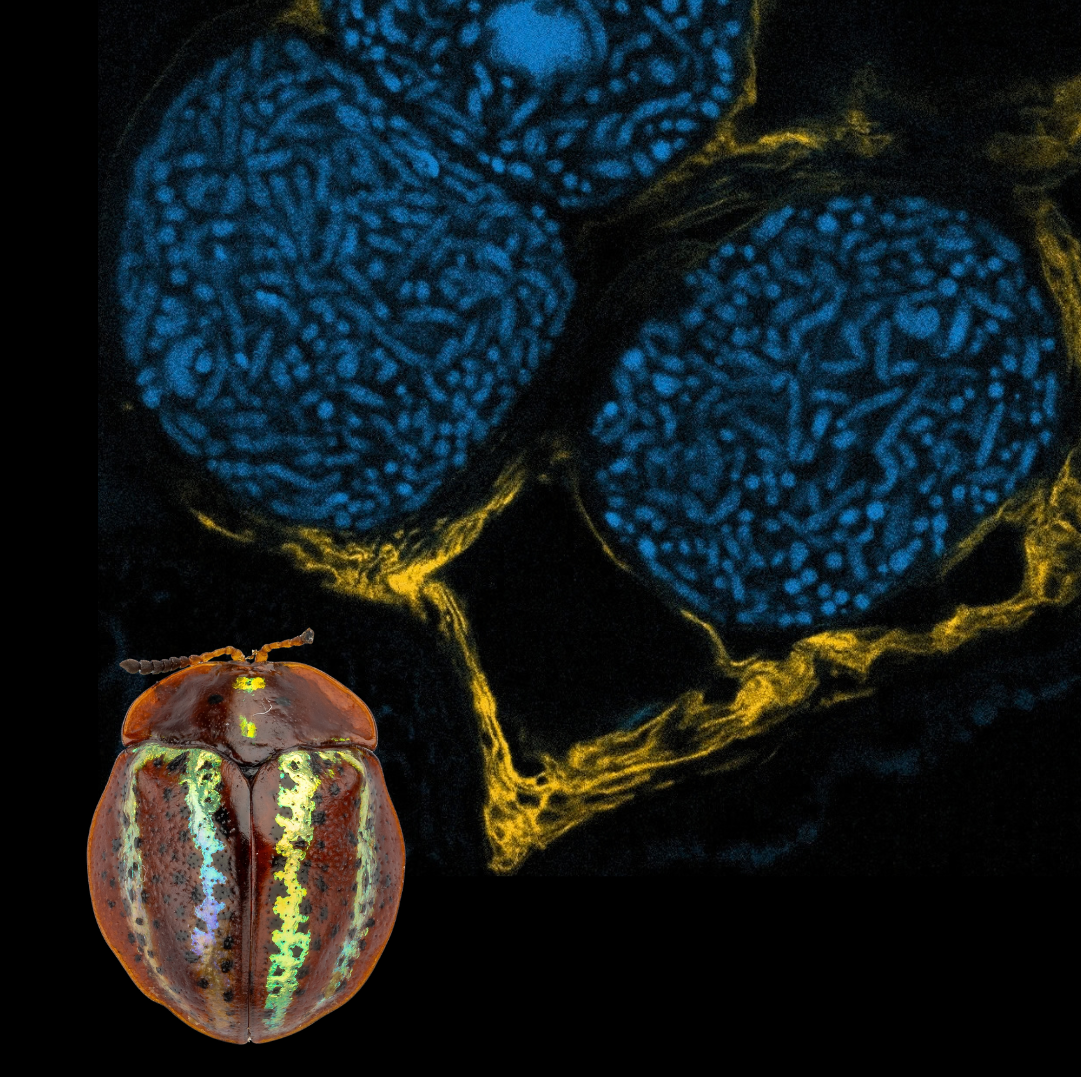
On New Year's Eve 1994, Sophien collected a ground beetle from the Australian outback that was later described by the late German entomologist Martin Baehr (Zoologische Staatssammlung München, ZSM) as Renneria kamouni (Baehr, 1999). It was, as he puts it, "the most productive New Year’s Eve ever!"
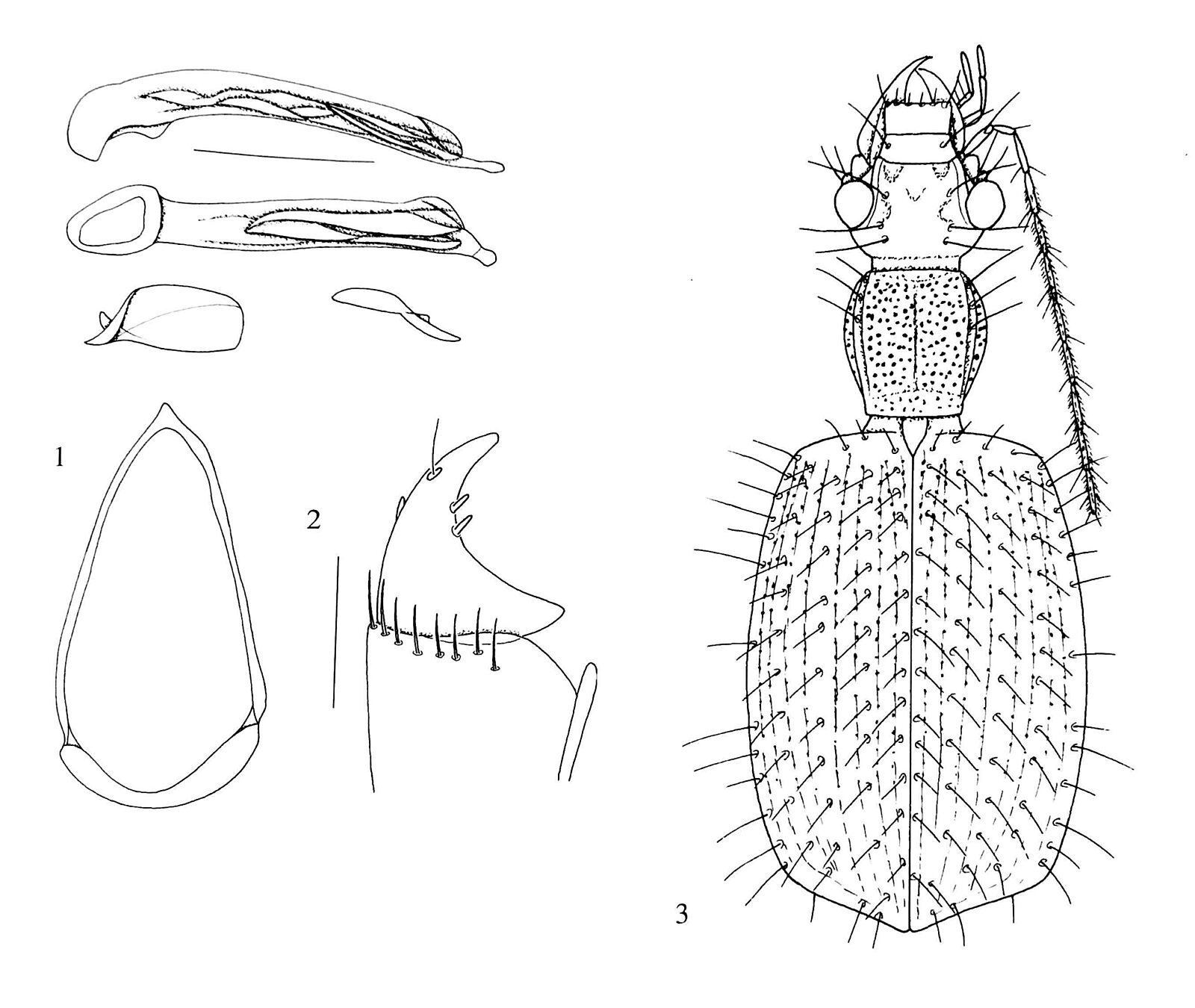
Renneria kamouni, a new species of ground beetle that Sophien collected from the Australian outback on New Year's Eve 1994.