The Sainsbury Laboratory joins the AI Collaborative: Food Security
written by James Canham
TSL is part of a multi-stakeholder effort to strengthen the resilience of global food systems
According to the UN, more than one in four people worldwide face moderate or severe food insecurity.
The Sainsbury Laboratory (TSL) is delighted to announce that it is a member of the AI Collaborative: Food Security which is supported by Google.org. The AI Collaborative brings together leading organisations to help improve food security for the world’s most vulnerable populations. Member organisations are developing and harnessing AI-powered tools to forecast food crises early enough to act, accelerate crop innovation, and get trustworthy advice to farmers.
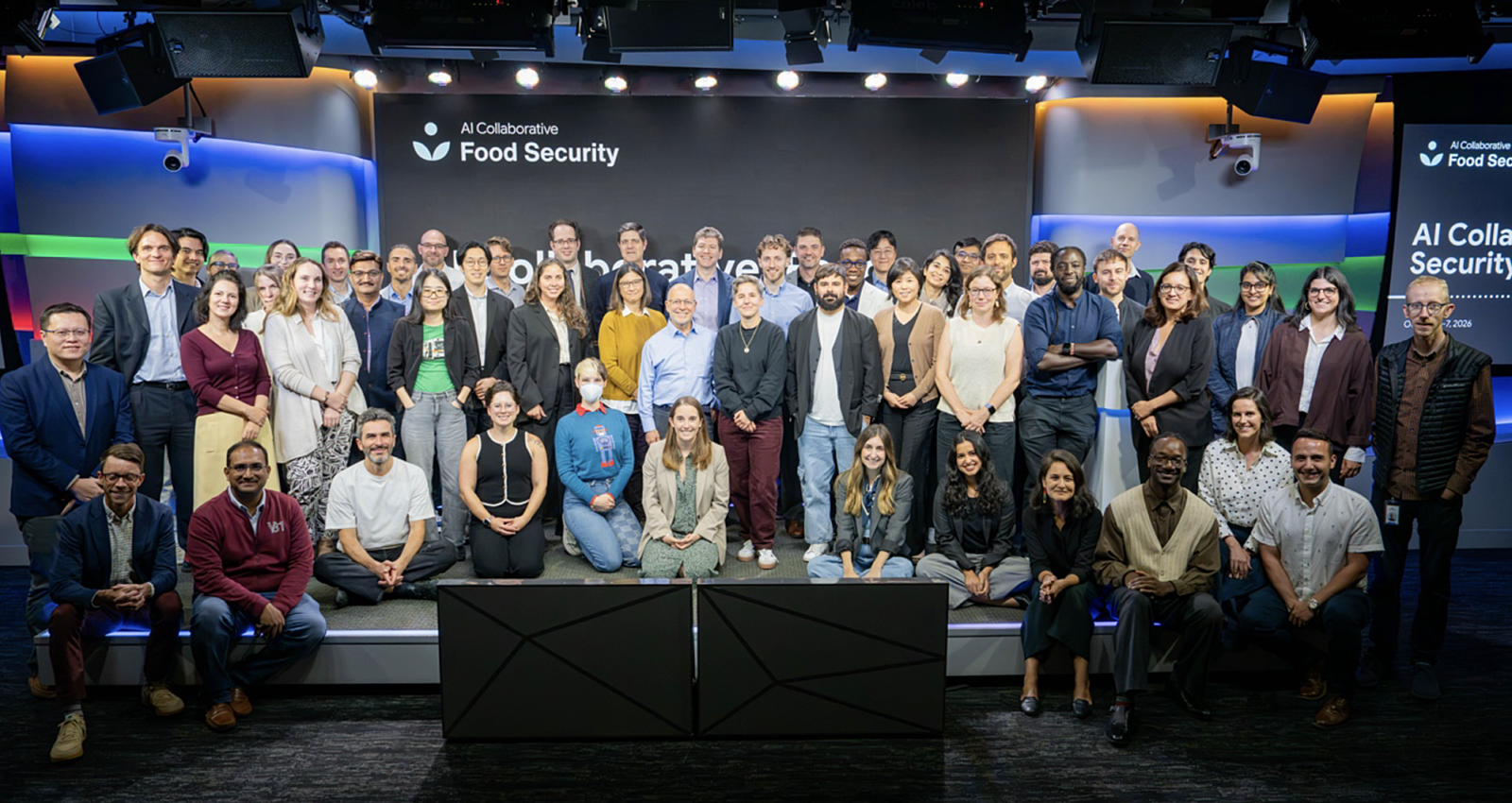
The AI Collaborative: Food Security convening in New York, October 2026.
At this second annual Summit, more than 60 people from 28 organisations shared a year of progress, with every member hosting a gallery-walk station. The Collaborative is now moving from shared problems to joint proposals, backed by a new Sandbox Fund that helps members test their ideas.
Read more about the AI Collaborative: Food Security
The initiative creates a shared space for research, data-sharing and collective learning. It connects organisations that might otherwise work in isolation: international organisations, nonprofits, researchers, humanitarian agencies and funders.
The Sainsbury Laboratory is contributing to the AI Collaborative by developing and scaling solutions, connecting with partners and sharing what works. Earlier this year, with support from Google.org’s AI for Science Fund, TSL launched Bifrost, an ambitious research and technology initiative designed by Professor Sophien Kamoun and team, which uses Google DeepMind’s AlphaFold3 to predict interactions between plant immune receptors and pathogens based on genome sequence data.
As AI-powered solutions give us better tools and clearer information to act on, openness and equity matter as much as the tools themselves: the benefits should reach the researchers and communities who need them most.
Together we work towards a world where food systems are resilient, sustainable and secure for everyone, powered by responsible AI – taking on challenges that no single organisation can solve alone.
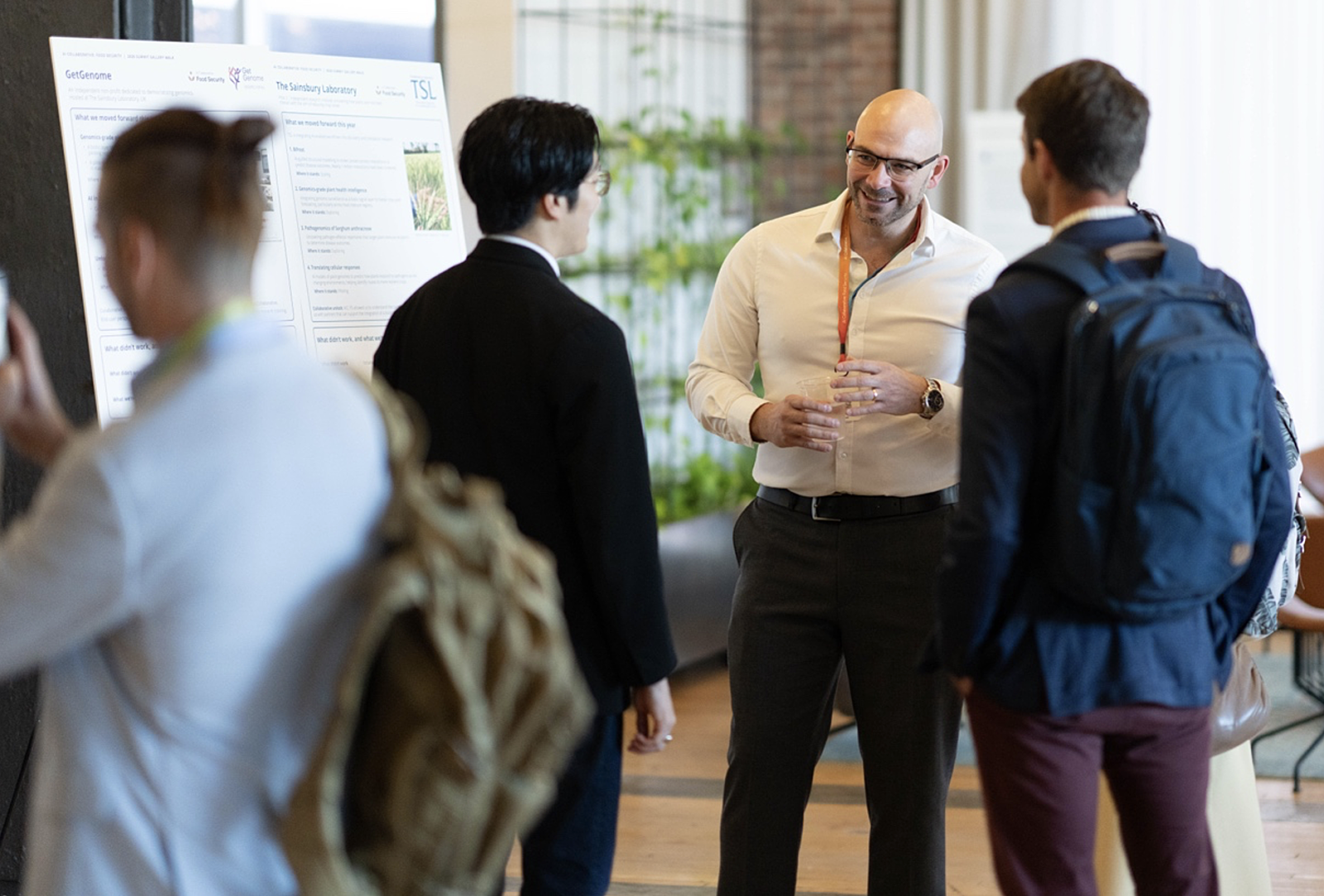
Dr Tatsuya Nobori (TSL) and Dr James Canham (GetGenome) at the AI Collaborative: Food Security Summit gallery walk in New York, October 2026.

GetGenome, the non-profit organisation empowering researchers across underserved regions, is co-developing proposals with members of the Collaborative.
In September 2026, TSL and GetGenome delivered AI in Genomics: Real-World Applications and Opportunities – a hands-on workshop delivered across two research organisations in Tunisia. The workshop brought together researchers, building skills in AI-driven workflows so that the divide between well- and under-resourced communities is not widened by unequal access to the technology. You can read the full workshop report on Zenodo.
GetGenome has made resources, including training material, openly available on its Training Wiki to ensure empowerment extends beyond the workshops themselves.
Genomics is unlocking genetic diversity that can help safeguard crop production. In April 2026, GetGenome supported the Higher Institute of Biotechnology at the University of Sfax and the National Gene Bank of Tunisia to generate the genomic sequencing of two iconic Tunisian durum wheat landraces, Mahmoudi and Chili.
The data, made freely available through OpenDurumGPT, gives breeders a new resource for developing wheat adapted to drought, heat and soil salinity. The Collaborative has featured this work as an example of what open, locally led genomics can contribute to food security.
To find out more about our work, visit tsl.ac.uk and getgenome.net. To learn more about the Collaborative, visit aicfoodsecurity.org and follow AI Collaborative: Food Security on LinkedIn.