Student Perspective: Training New Leaders in Plant Science
We spoke with former TSL MSc Global Plant Health student, Ruth Annang, about the importance of leadership and communication training for plant scientists after she participated in the Africa Biennial Biosciences Communication (ABBC) symposium held in Zambia.
“I’ve always been interested in policy and regulations. I knew that to address those policies, I needed a fundamental understanding of science, which is why I came to TSL for the MSc in Global Plant Health.
TSL researches solutions to plant diseases, and I’ve always wanted to do that. Being here - the seminars, the research projects, and being funded to go to the ABBC conference in Zambia - further validated my plans. Now I’m more confident in the career path I want to take.”
Ruth Annang, TSL MSc Alumna
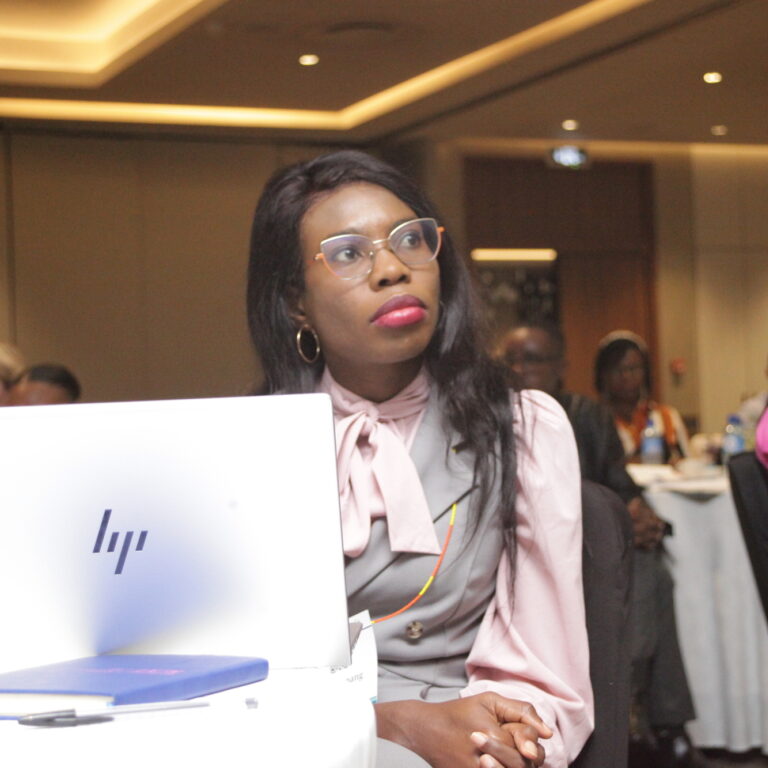
Laura Turchi, TSL’s Communications Officer, met with Ruth shortly after she returned from her trip to Zambia to catch up about her experience:
Laura: "Are there any key messages you’d like to share with the next cohort for TSL’s MSc in Global Plant Health?"
Ruth: "I realized during this conference how vital communication is. Your work can be ignored if you can’t pitch it correctly - even if you’re saying the right things. This is true even if you stay within a purely academic career as it can apply to conferences, collaborations or even job interviews.
I would tell the next cohort to approach the leadership module with an open mind. As scientists, let’s not forget that we need to communicate our science. While we learn the molecular side of plant pathology, we should also embrace the leadership modules.
Science is not just about facts and evidence; it’s about communication and establishing trust. Most of my cohort intend to go back to Africa, so we all have an important role in making science accessible to communities."
Social media and misinformation
Laura: "Did the conference in Zambia give you new ideas about science communication?"
Ruth: "One of the most interesting discussions looked at the role of social media in science communication. In Kenya, there was an experience where the President announced on YouTube that livestock needed to be vaccinated. But social media took it in a different way, and it became all these memes like #MyCowMyChoice.
It’s concerning to see how easy the platforms allow rumours to be interpreted as fact, especially when they confirm the suspicions of people who already lack trust in certain systems. The government initiative to protect livestock against disease quickly turned into a conspiracy theory claiming foreign powers are behind the plan to exploit farmers. The benefit of social media is that information spreads quickly, far and wide - this is also the disadvantage."
The power of local language
Ruth: "Another thing that happened in Kenya - which I think scientists could learn from - was an example of digital activism against a new financial bill. Young activists took the entire bill and translated it into several different local languages, not just English. That way, even people at the grassroots level could understand exactly what it meant and had the opportunity to oppose it or ask for amendments before it passed.
It just shows how much more engaged people are with information that’s in their own language and how you might suddenly start getting contributions from communities that have been disconnected and unheard until that point.
I can see how this could work for science, but the hindrance is the scientific words. You don't even know how to say them in a local language. How do you translate "DNA or Taq polymerase?
What I think can be done is simplifying the science at a basic level, instead of using big words. If you're talking about resistance genes or proteins that recognize effectors, is there a simpler way to explain it to someone with no knowledge of science?"
Communicating what matters
Ruth: "If you speak to farmers, they don’t care about the lab process. They want to know: how much money will I make? What is the yield? What is the risk?
We should start by explaining the benefits.
If you go to the grassroots level to get a community to adopt a technology, they want to know the benefits. Also, trying to explain GM (genetic modification) to certain countries is very tricky. You have to find the best possible way to address the ridiculous theories, like "GM will make you develop breasts or change your hormones" and these are the stories back home in Africa. You need to find a completely different way to remove that fear - use basic language, translate it, and get a trusted community person to explain it to them."
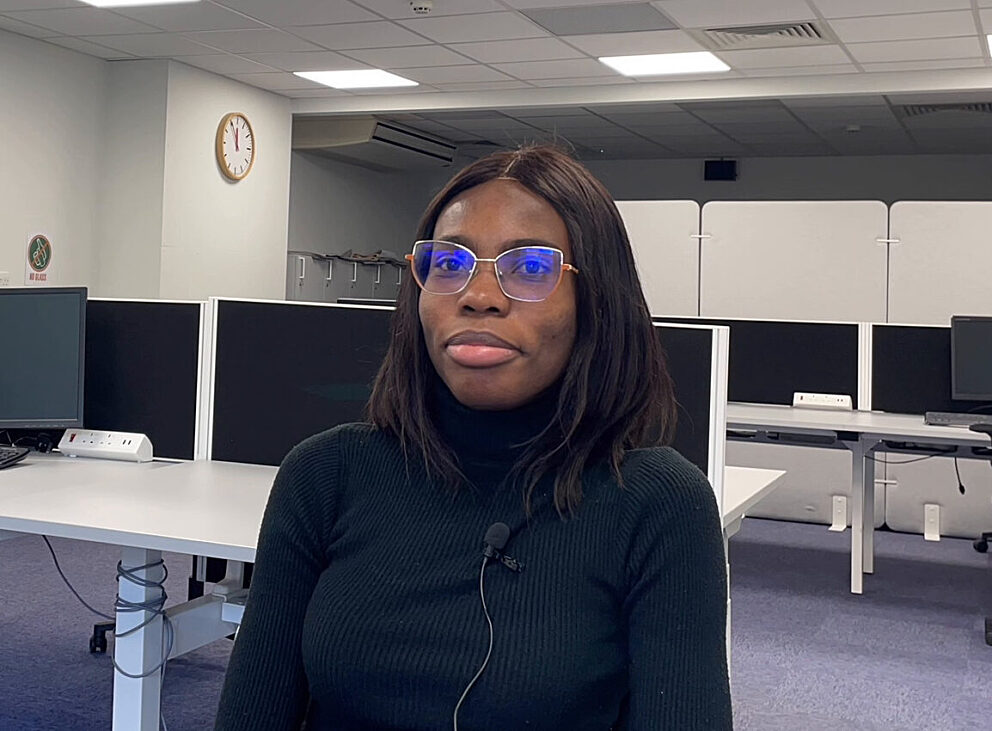
Ruth training for a public interview during the Communications module of the MSc in Global Plant Health
Leadership training in TSL's MSc in Global Plant Health
Laura: "Did your MSc at TSL help prepare you for challenges like this?"
Ruth: "The module I liked most during my MSc was the leadership course. In science we expect modules like Data Science, MPMI and Plant Health, but the real challenge is communicating that science.
If you step outside the scientific community, you have to explain your work in a way people understand. And even if you stay in the lab, you will eventually take on leadership roles — in industry, academia, or research teams. I think sometimes in the scientific community, we don’t really get a lot of this training. For my career as a scientist, that module was vital and a defining factor of TSL’s MSc course."
A clear path forward
Laura: "You met so many people from across the continent who are passionate about these problems. Has this given you a new energy - seeing a path where you could do so much - or has it made you feel like, 'Oh my word, this is going to be so much work; I'm not sure I want to tackle that'?"
Ruth: "Honestly, it’s both inspiring and overwhelming. You realise misinformation isn’t just in Africa — it’s everywhere.
You think ‘I could do something here’, but then you see how big the challenge is. In many places misinformation is tied to deep cultural or religious beliefs, so change happens slowly.
I also feel I need to grow more as a scientist. People trust real experiences — they want to hear 'I’ve done this and it works.'
What’s next?
Laura: "What does "growing as a scientist" look like for you?"
Ruth: "For me, growing as a scientist means building my independence and confidence in research, and contributing to work that has real-world impact.
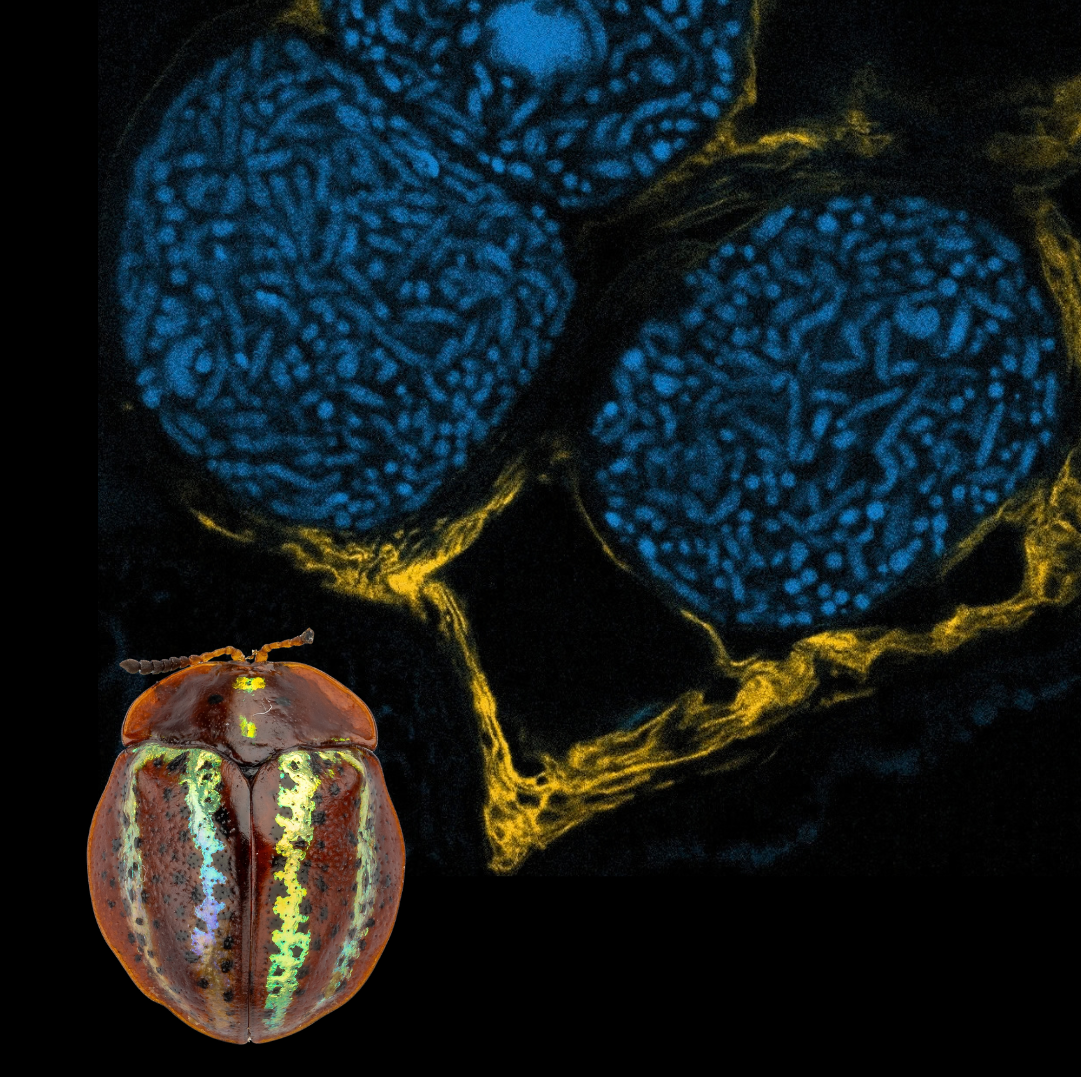
Since finishing my MSc in Global Plant Health at TSL, I have joined the Jonathan Jones group as a predoctoral intern, where I work on plant resistance to Phytophthora. This pathogen can cause significant damage to a range of crops, and our aim is to use a potato relative, Solanum americanum, to identify and characterise genes that could help improve resistance.
Next, I would like to do a PhD. I am fortunate to have received two offers, one in Cambridge and another in Germany, and I am now deciding between them. I’m excited to see what the future holds."