Paired and Poised for Plant Immunity Action
Paired plant immune receptors RRS1 and RPS4 surprise researchers by pre-assembling into a functional oligomer
A research collaboration between the Jonathan Jones Group at The Sainsbury Laboratory (TSL) and the Ahn Lab at the University of Edinburgh has delivered new insights into how plants detect and respond to disease.
In this publication, researchers demonstrate that paired plant immune receptors, RRS1 and RPS4, physically pre-assemble into a heteromeric, functional defense complex long before a pathogen is detected, opening up a new paradigm in how these immune receptors work together to activate plant immunity.
The authors suggest a "Poised" Model: RRS1 and RPS4 physically pre-assemble into this protein complex before pathogen arrival. This keeps immune activation suppressed when not needed, but ready for a quick response upon infection.
This is also the first report of a functional heteromeric (mixed) TIR protein oligomer capable of NAD+ hydrolysis to signal defense - made up of distinct paired NLR receptors, RRS1 and RPS4.
Plant immunity relies on a sophisticated internal alarm system powered by intracellular receptors known as NLRs (nucleotide-binding leucine-rich repeat proteins).
In recent years, research has shifted away from only studying these NLR receptors as solo components as increasing evidence points to an intricate world of molecular relationships and cascading signals.
For example, some NLR receptors pair up and function as a coordinated sensor and helper (or executor) team. NLR pairs are so co-dependent on each other for their function that they are often encoded next to each other on the chromosome.
Beyond working in pairs, NLRs also collaborate on a larger scale by assembling into multi-protein ring complexes. These structures enable more powerful cellular defenses, and have become an exciting area in plant immunity research to explore using structural biology methods.
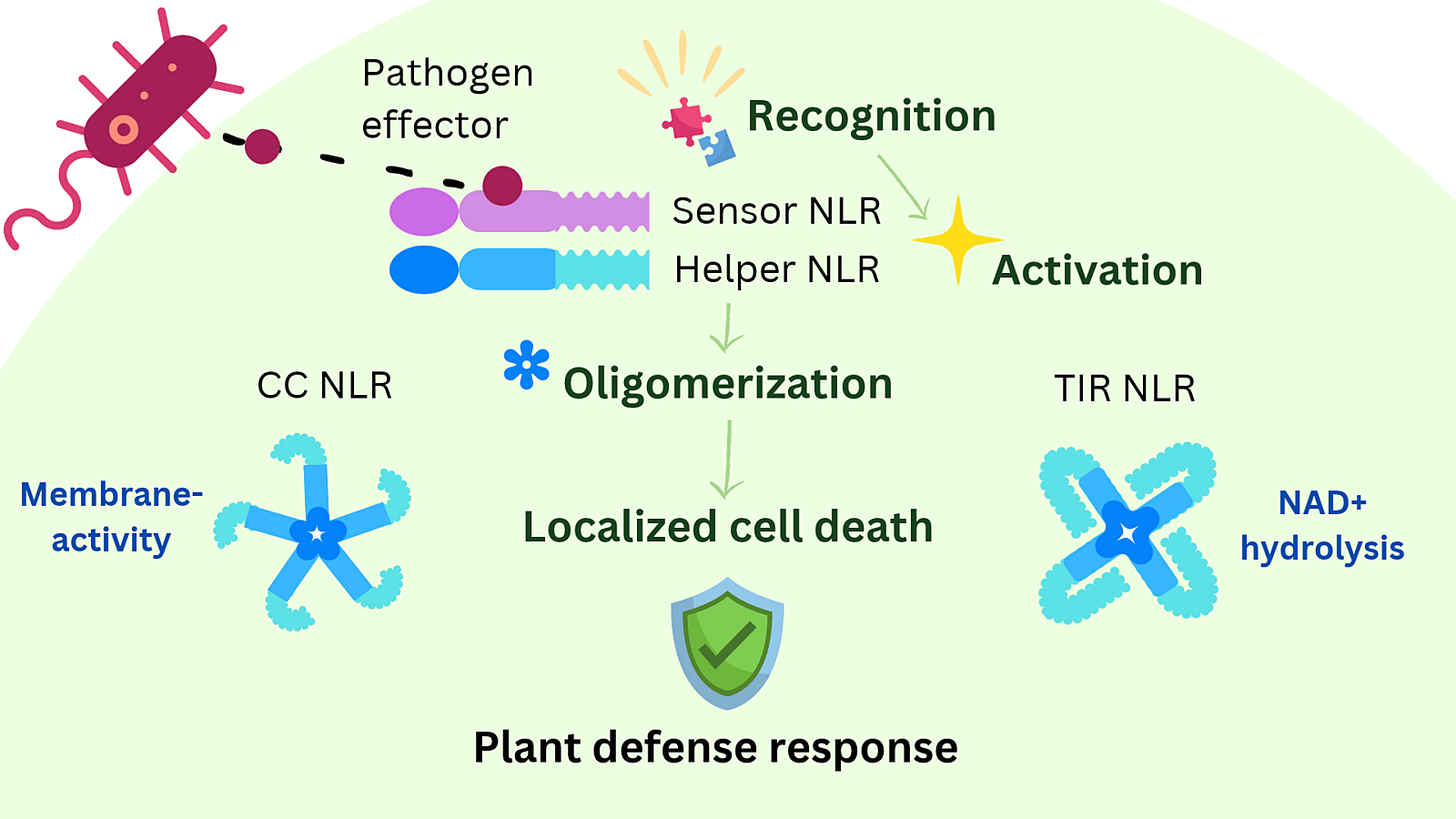
Image credit: Mia Cerfonteyn, The Sainsbury Laboratory
As part of a collaboration between Hee-Kyung Ahn’s research group at the University of Edinburgh and the Jonathan Jones Group at The Sainsbury Laboratory (TSL), researchers focused on a classic NLR pair from the model plant Arabidopsis thaliana, RRS1-R and RPS4. Arabidopsis RRS1-R (Resistance to Ralstonia solanacearum; sensor) and RPS4 (Resistance to Pseudomonas syringae; executor) comprise a TIR-NLR pair that has been extensively studied as a model for paired NLRs.
RRS1-R acts as the dedicated sensor, detecting effector proteins injected by invading pathogens, while RPS4 acts as the helper (or executor), triggering the cell’s defense response.
This well-known NLR pair is particularly interesting, because RPS4 can activate immune defenses even when no pathogen is present. It relies on RRS1-R to suppress its activation until a genuine threat is detected.
RRS1-R and RPS4 have a specific structure, called a TIR domain, that acts as an enzyme when these immune receptors self-associate upon effector recognition and form oligomers. TIR domains are highly conserved protein structures that exhibit NAD+-hydrolyzing (NADase) activity upon oligomerization into tetramers, which subsequently results in localized cell death, or hypersensitive response.
This study reports for the first time a heteromeric (mixed) TIR protein oligomer made up of RRS1 and RPS4, that has NADase activity needed for plant defence. Until now, all reported TIR oligomers (containing multiples of one NLR) that acquire function as NADases in plants had been homomers.
The team also found that the RRS1/RPS4 heteromeric complex forms before activation, but this is not sufficient to activate its enzymatic activity.
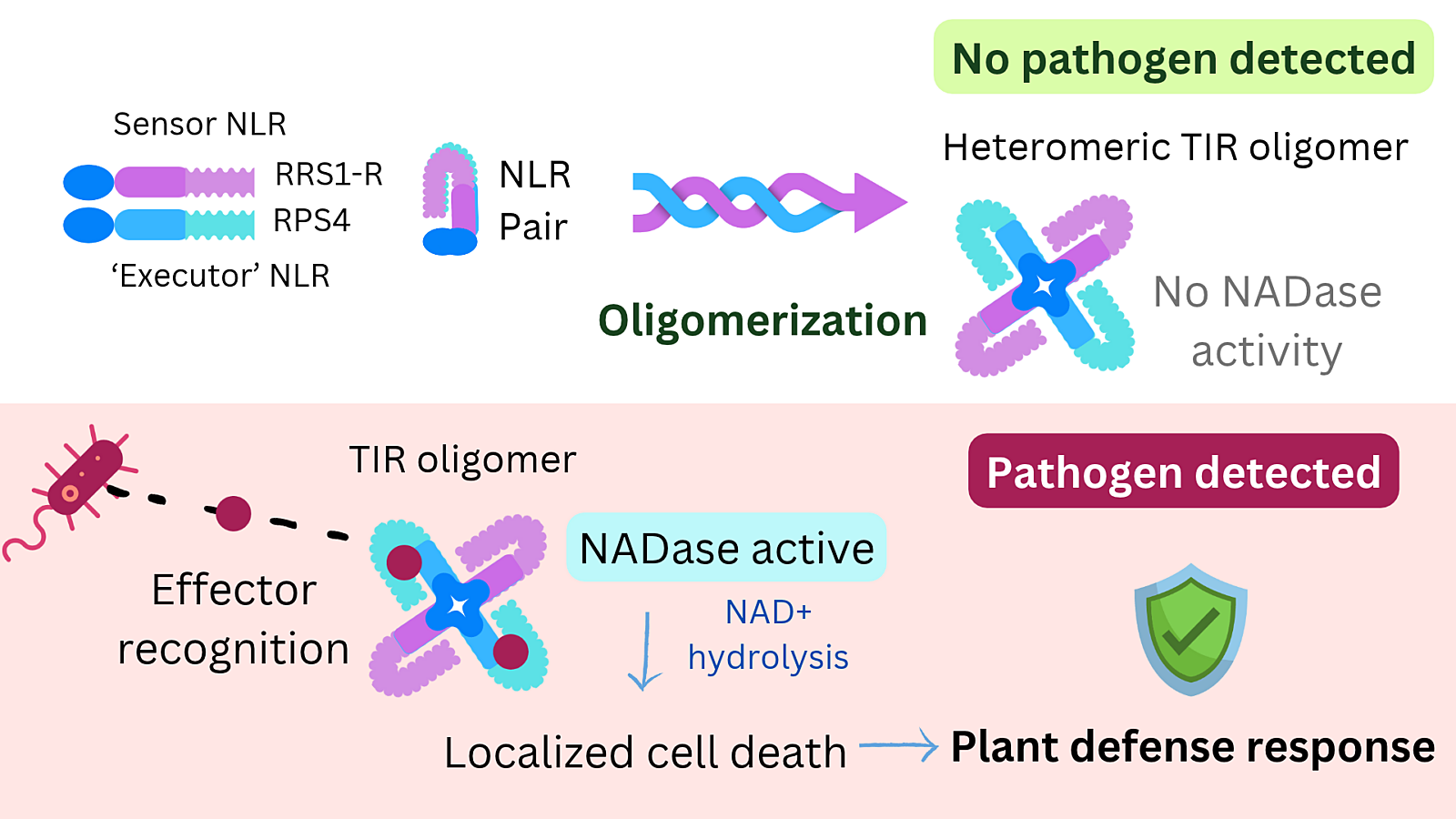
Image credit: Mia Cerfonteyn, The Sainsbury Laboratory
Hee-Kyung and co-authors suggest a ‘poised’ oligomerization model, whereby the inactive RRS1/RPS4 complex forms inside the cell and is rapidly activated upon pathogen effector recognition. This strategy would allow a faster response via a small structural change compared to when individual proteins are induced into oligomerization after effector detection.
“If the proteins are already bundled together, starting the defense reaction becomes much faster. Rather than spending critical time finding each other across the cell during an attack, the pre-assembled bundle only needs to catch the pathogen signal to trigger the defense. This ‘poised’ model explains an efficient way for plant proteins to quickly recognize pathogen intrusion, and act on it to prevent further spread of the pathogen.” says Dr Hee-Kyung Ahn, who is now a Group Leader at the University of Edinburgh after her time in the Jonathan Jones Group at The Sainsbury Laboratory.
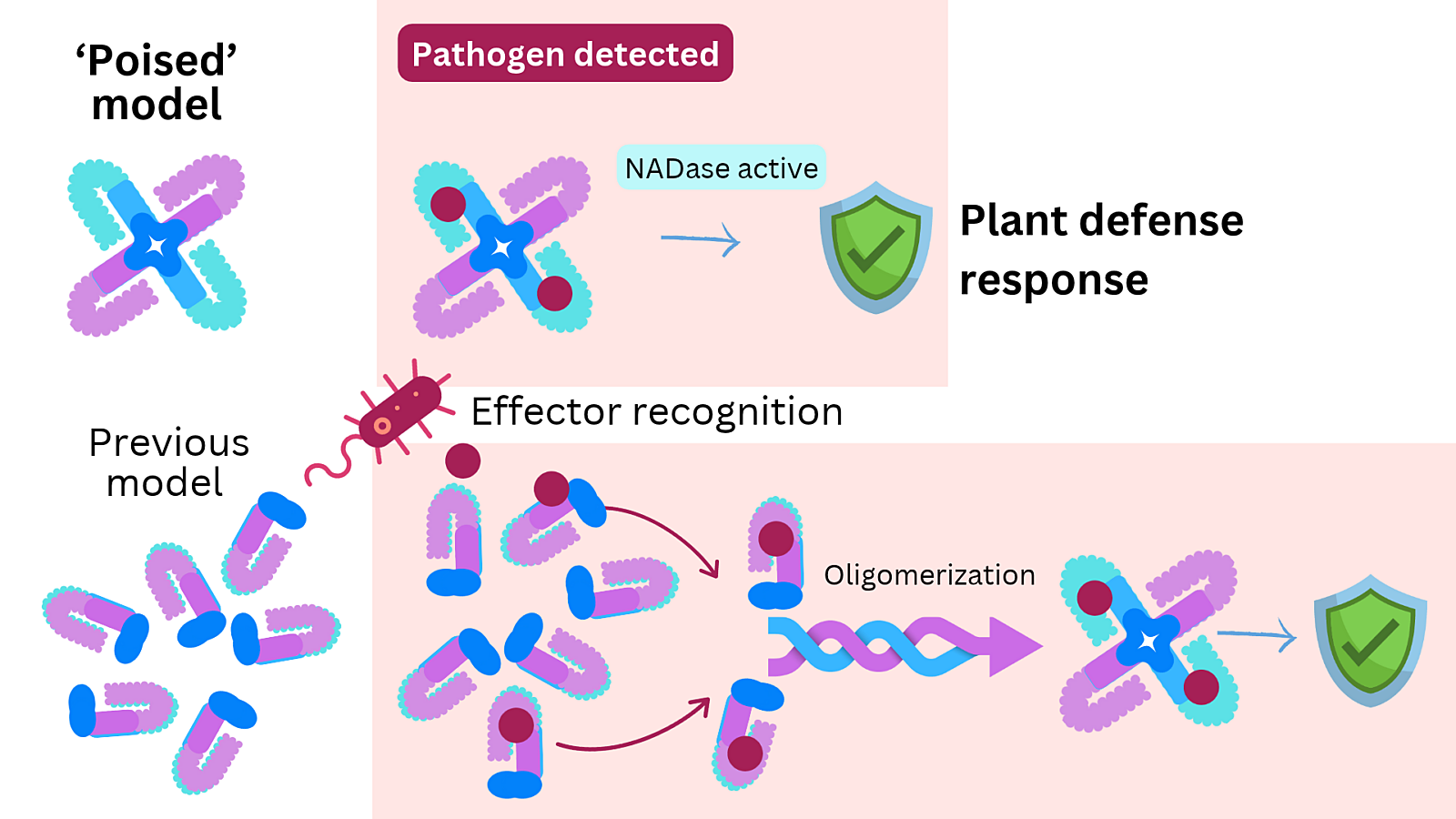
Image credit: Mia Cerfonteyn, The Sainsbury Laboratory
Poised for Better Crops
These new insights are particularly impactful because the well-studied RRS1/RPS4 pair has proven value as a foundational archetype for crop engineering. As this paired system and its genomic architecture are conserved across many crop species, it serves as a blueprint for building disease resistance in modern agriculture.
Prof. Jonathan Jones, group leader at The Sainsbury Laboratory, says “It’s great to see our current understanding of the RPS4/RRS1-R complex reach the literature. It's been a 15-year mission to try to figure out how this immune receptor complex works and I’m very happy to see Hee-Kyung take it forward in her own lab”.
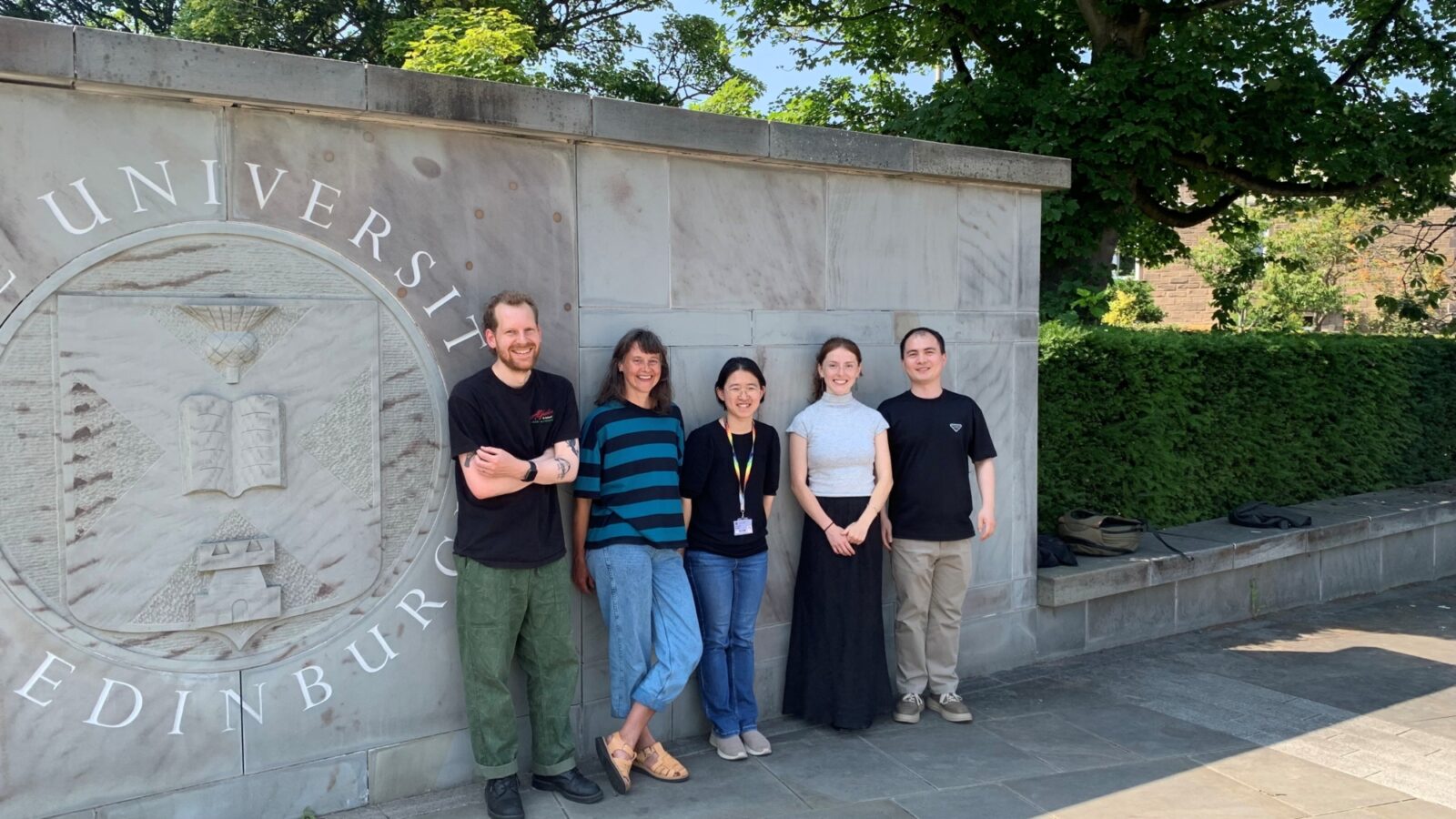
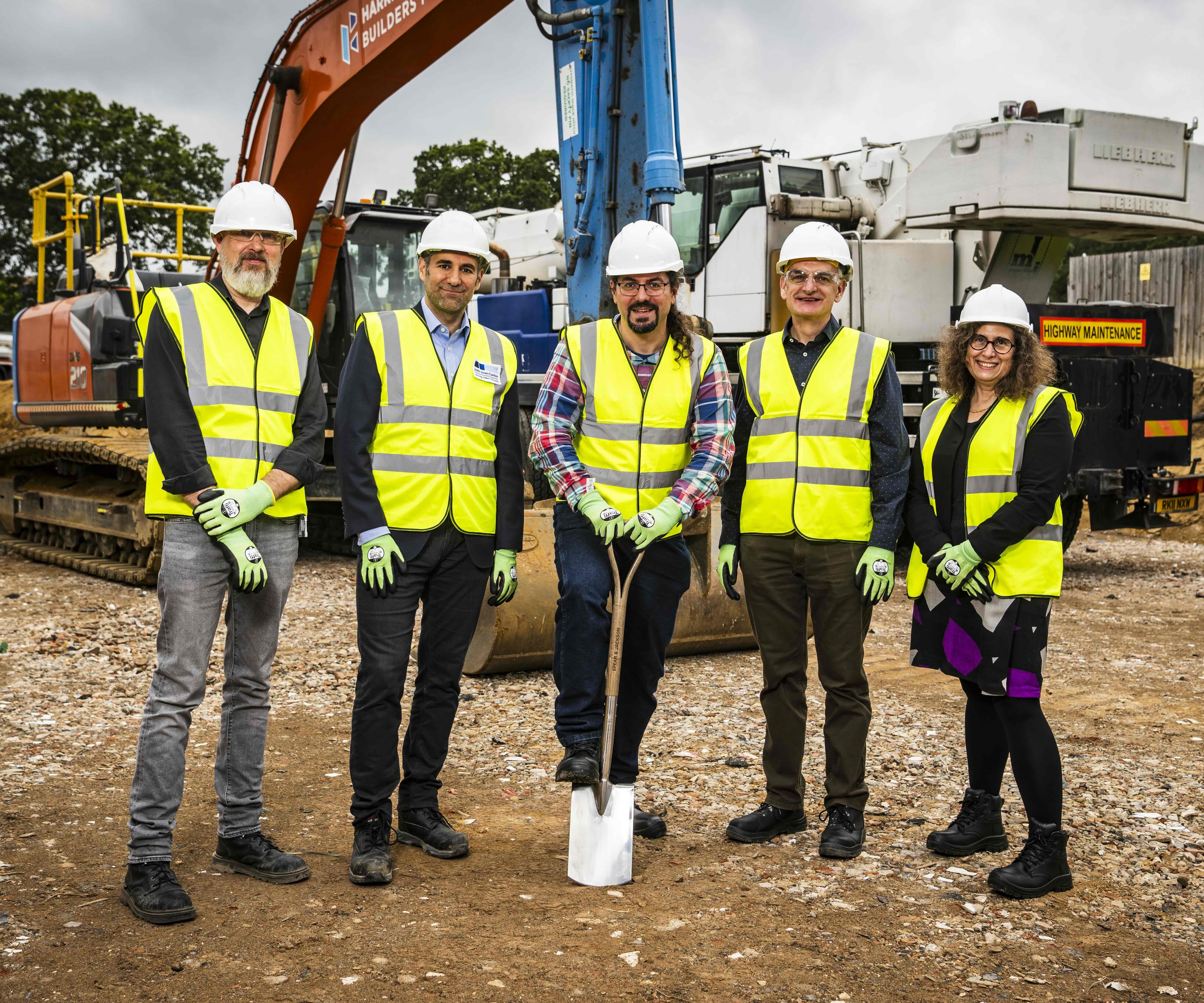
“This research spans works from groups of many countries and cities, over a long period of time. Each and everyone’s contribution were meaningful. I would also like to thank all the previous members of the group who have contributed to research that we could build our current research on. As Newton famously said, we are standing on the shoulders of giants.” - Dr Hee-Kyung Ahn, pictured here (in the middle) with her research group at the University of Edinburgh.
Collaborators & Acknowledgments
- Hypothesis & Experimental Design: Present and past members of the Jones group (TSL) and the Ahn group (University of Edinburgh).
- Proteomics & Analysis: The TSL Proteomics Facility, with specialized dataset analysis in collaboration with Hanyang University and the Korea Basic Science Institute.
- Biochemistry & Methodology: TIR protein biology supported by the Wenbo Ma group (TSL), and protein purification methods optimized alongside the Mark Banfield group at the John Innes Centre.
- Funding: TSL core budget and ERC Advanced Investigator Grant “ImmunityByPairDesign” https://cordis.europa.eu/proje...