MSc perspective: Misinformation in African Agritech
"My own journey, from struggling to explain biotechnology to sceptical farmers in Ghana to gaining leadership insights during my MSc and now witnessing the collective momentum at ABBC 2025, has deepened my conviction about the central role of clear, trusted communication in unlocking African agriculture’s potential."
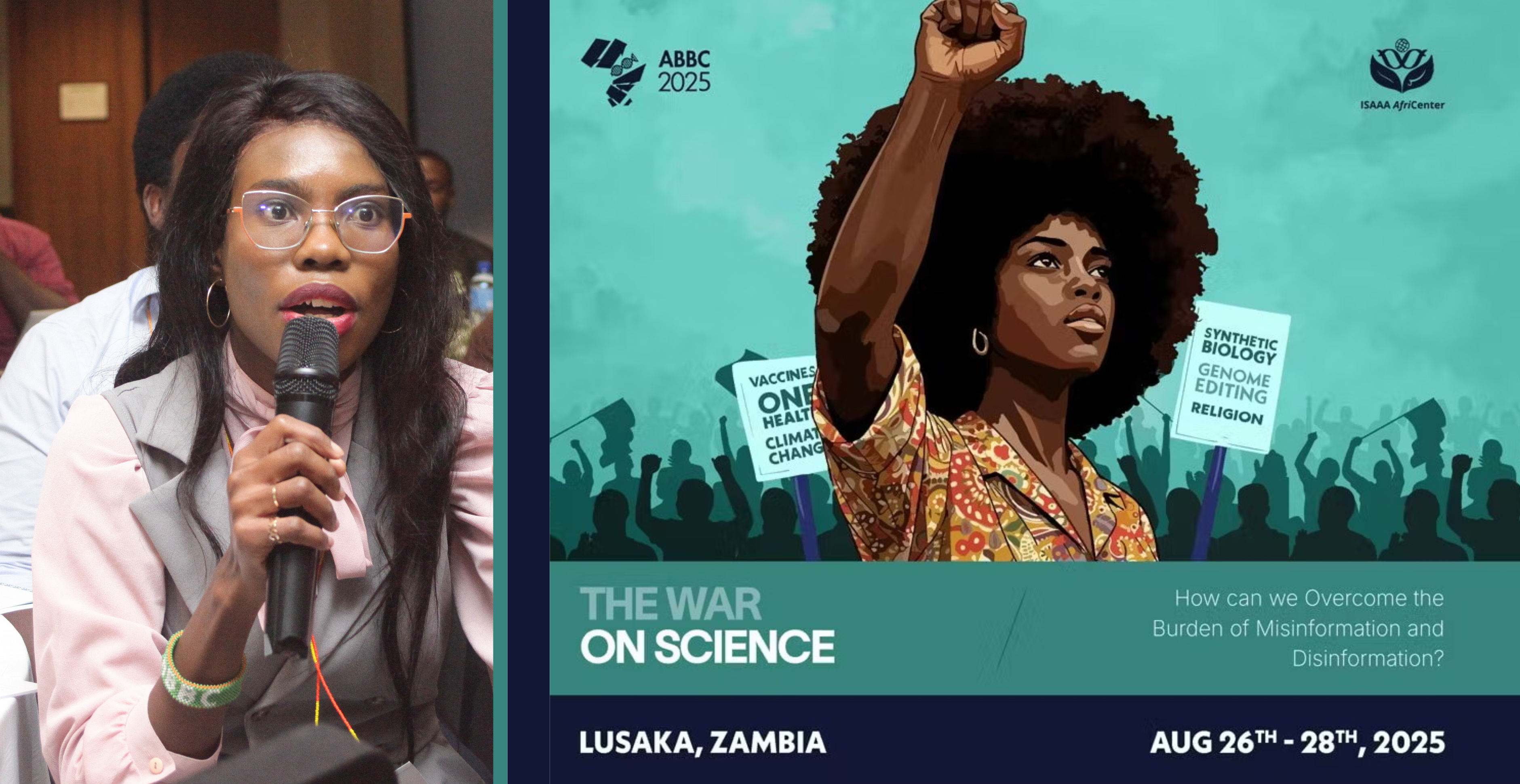
MSc student in Global Plant Health, Ruth Annang, writes about misinformation in Africa’s agricultural and scientific landscapes as a reflection on her participation in the Africa Biennial Biosciences Communications Conference (ABBC 2025) held in Zambia.
Bridging the gap: tackling misinformation in African Agritech
By Ruth Annang
Agriculture in Africa stands at a crossroads. Across countries like Ghana, Kenya, Uganda, Ethiopia, Malawi, and Zambia, innovations in the agricultural technology (agritech) sector are raising hopes for higher yields, food security and resilience to climate change. Yet, a prevalent and often underestimated challenge threatens these gains: misinformation about scientific technologies.
Before joining The Sainsbury Laboratory and embarking on my MSc journey in Global Plant Health, my exposure to agritech was both exciting and sobering. Ghana, where I began my work, boasts many agritech startups and well-established companies striving to serve farmers.
However, I observed a widespread scepticism among farmers, rooted in misinformation, myths, and deep-seated misconceptions.
For many, including members of my own family, concepts such as genetics or genetic technologies in agriculture were largely misunderstood. Their perceptions were shaped by hearsay and myths often amplified by word of mouth and proliferated through incomplete or incorrect explanations of biotechnology.
While working at a Biotechnology Centre, the challenge was somewhat tempered by the scientific community’s inherent familiarity with these topics. Conversely, explaining such concepts to farmers unfamiliar with science and technology was daunting, and I often struggled to communicate clearly and effectively. This experience made me appreciate the complexity of science communication at the grassroots level.
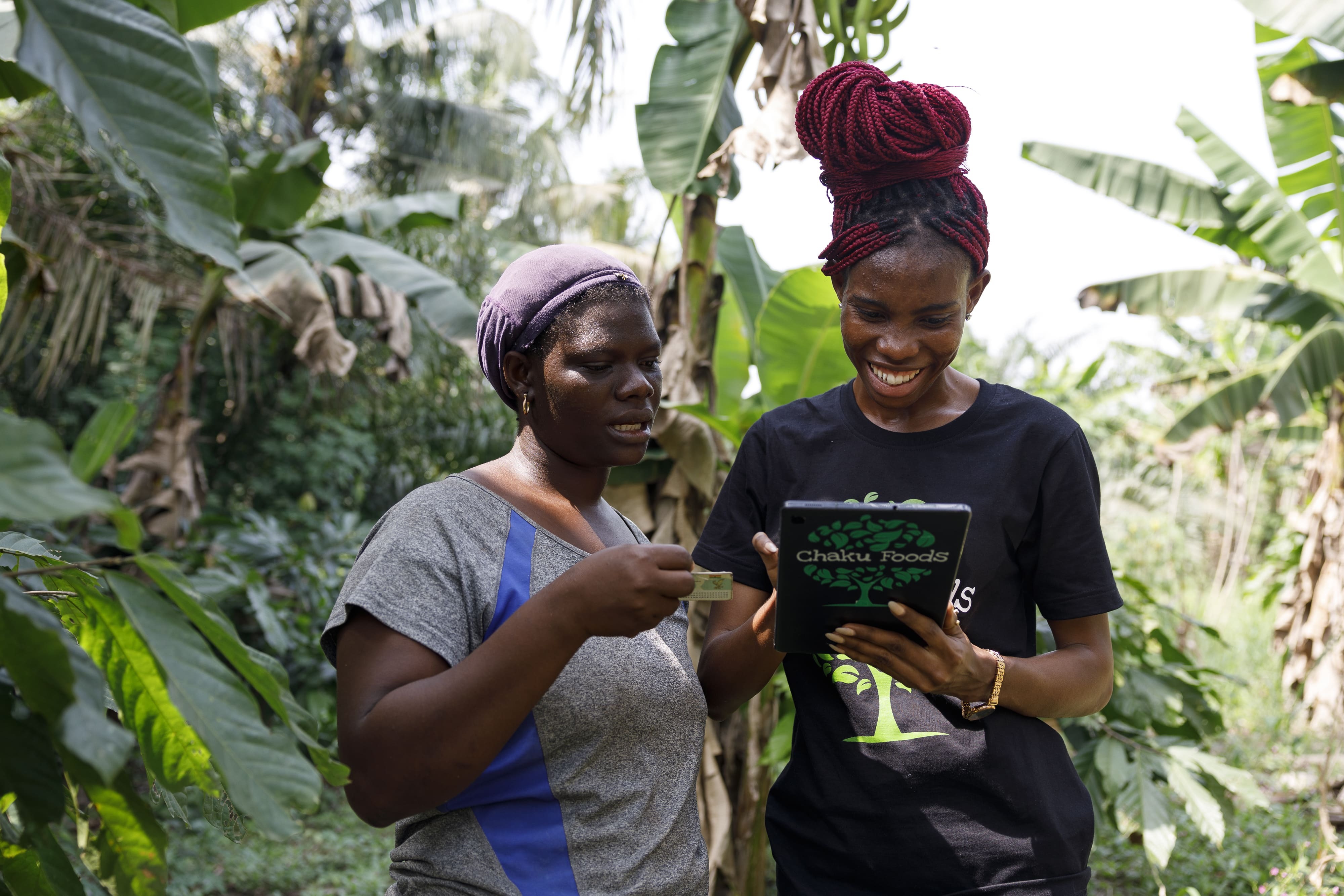
Ruth explaining to a farmer how new crop yield prediction technology is intended to work. This was taken during her time at Chaku Foods where she helped map farmlands in the Eastern Region of Ghana to support the development of this technology.
One of the most impactful aspects of my MSc program has been the leadership module, which illuminated a vital truth: communicating science effectively is much harder than simply ‘explaining the facts.’ The course emphasized that successful communication hinges on understanding the audience’s knowledge, values and concerns, and tailoring the message accordingly to prevent misinterpretations.
Farmers make decisions not only based on data but also through the lens of lived experience, cultural beliefs and historical mistrust of outside interventions. Successful engagement means listening first, understanding concerns, and tailoring messages so that innovations are seen not as foreign impositions but as tools for empowerment.
Attending the Africa Biennial Biosciences Communications Conference (ABBC 2025) in Lusaka, Zambia underscored the gravity of misinformation in Africa’s agricultural and scientific landscapes and showcased innovative approaches to tackle it.
Misinformation, far from being a minor nuisance, can delay the commercialization of biotech products by years, resulting in millions in agricultural losses, exemplified by Kenya’s delayed approvals for Bt maize and cotton.
Yet the conference also offered hope. Commitment at high political levels was evident through efforts like COMESA-ACTESA’s work to harmonize biosafety laws across 21 African states, alongside Zambia’s leadership in developing resilient climate-smart crops. These initiatives underscored the critical importance of regulatory environments that keep pace with scientific advances.
Particularly inspiring were the presentations from youth-led AI initiatives, which use chatbots, real-time tracking of misinformation, and multilingual educational tools tailored for farmers. The conference highlighted the broader impact of misinformation across agriculture, health, and environmental sectors, calling for integrated, cross-sectoral OneHealth approaches in both communication and policy development.
The message was clear: progress in agritech will depend as much on communication as on innovation.
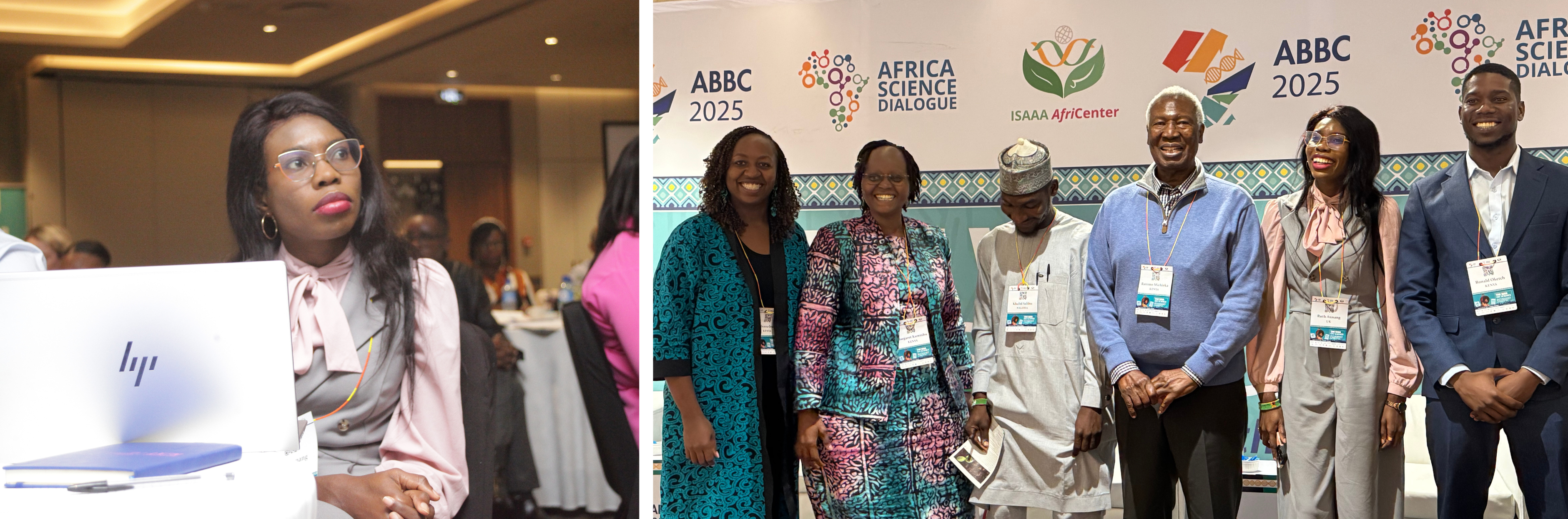
Ruth connecting with change-makers at the conference.
From left to right: Bibiana Iraki (Senior Programs Officer, ISAAA Africenter), Margaret Karembu (Director, ISAAA Africenter and ABBC Convenor), Khalid Umar Salihu (Farmer, Nigeria), Prof. Ratemo Michieka (Chair, Kenya National Academy of Sciences), Ruth Annang (MSc student at The Sainsbury Laboratory), Ronald Oketch (AI developer, AgriGuard).
If Africa is to seize the promise of agritech, it demands sustained, multifaceted action. Central to this effort is strengthening local scientific ownership and trust. Africans must lead the narrative around their innovations, building pride in homegrown technologies while directly addressing historical scepticism and cultural perceptions that shape how communities receive new ideas.
Equally important is enhancing science communication. Scientists and communicators need training to engage effectively with communities, using local languages and trusted intermediaries to ensure complex concepts are understood and myths are countered.
Emerging technologies also offer powerful tools in this fight. AI-driven platforms and digital resources can provide real-time fact-checking and support direct engagement with farmers. Strategic investments are needed to scale these innovations and ensure they reach even the most remote rural areas.
Alongside technology, harmonized policies and strong regulatory frameworks are essential. Clear, efficient systems for approving and disseminating biotech products reduce delays and prevent the politicization of scientific innovation driven by misinformation.
No single actor can tackle this challenge alone.
Governments, research institutions, private sector actors, media, and community organizations must collaborate to deliver consistent, transparent messaging and responsive feedback mechanisms.
Young Africans represent a vital force in this endeavour. Tech-savvy, adaptable, and deeply connected to their communities, they can act as agents of change, both in developing innovative solutions and in communicating them effectively at the grassroots level.
My own journey, from struggling to explain biotechnology to sceptical farmers in Ghana to gaining leadership insights during my MSc and now witnessing the collective momentum at ABBC 2025, has deepened my conviction about the central role of clear, trusted communication in unlocking African agriculture’s potential.
Science will only drive sustainable development if it is embraced by the people whose livelihoods depend on it. Combating misinformation is not just about correcting falsehoods or errors, it is about listening, engaging, and building relationships founded on trust.
If Africa can rise to this challenge, its agritech sector will not only overcome misinformation’s heavy toll but also lead the way toward a future of food security, climate resilience, and inclusive prosperity.
Acknowledgements: A heartfelt thank you to the ABBC organisers for inviting me, particularly Diana Hovarth (2Blades) for her support and guidance. The TSL Communications team funded my participation in the ABBC meeting and I hold a David Sainsbury International MSc Scholarship in Global Plant Health.