The Annual Roger Freedman Lecture
The Sainsbury Laboratory is proud to announce the establishment of The Annual Roger Freedman Lecture. This lecture will be given annually by a distinguished international scientist and will emphasise the impact of discovery science on biotechnology and world agriculture. It will be accompanied by award of the Roger Freedman Award Lecture Medal. The 1st Annual Roger Freedman Lecture will take place in 2026.
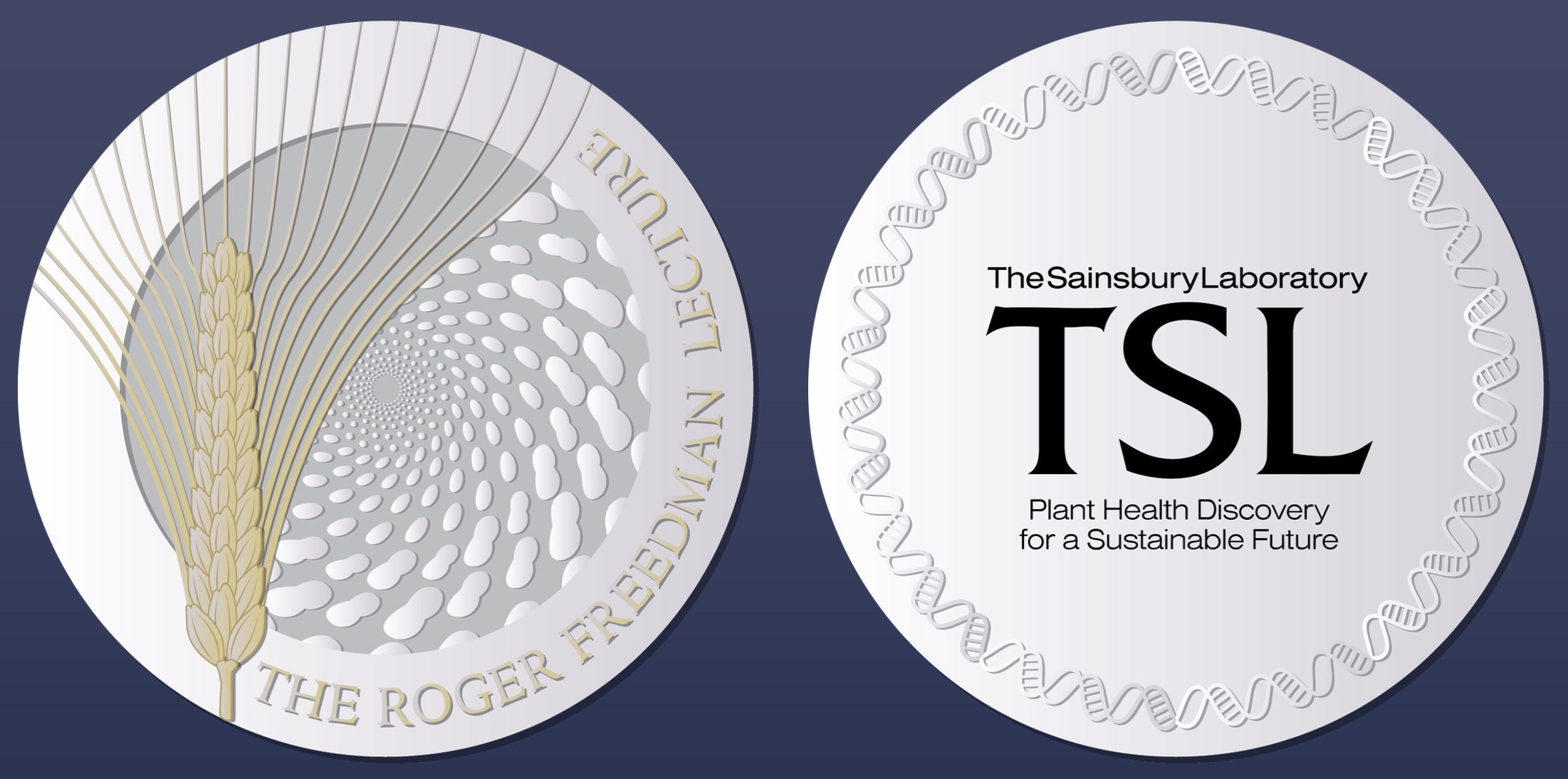
The Roger Freedman Award Lecture Medal. Design by Hsuan Pai.
Dr Roger Freedman is distinguished for his visionary leadership in supporting and advancing research on genetic resistance to crop diseases, his role in building and funding world-class research infrastructure, and his commitment to translating scientific discoveries into real-world agricultural solutions.
Dr Freedman was instrumental in establishing The Sainsbury Laboratory in Norwich. From its initial conception as an idea through to its first scientific appointments, and then as an active member of its Governing Council for more than 30 years, Roger Freedman has helped to guide the science and strategic direction of TSL.
As an advisor to the Gatsby Charitable Foundation, Roger had the insight and vision to guide Gatsby into making the investment that led to the laboratory being established in 1987 and opening the doors to its new building on the John Innes Centre campus in 1990. From the very start Dr Freedman emphasised the importance of discovery science and high-risk high-reward research. This has remained the ethos of the laboratory throughout its history.
But in addition, Roger has always been a strong advocate of the deployment of discoveries made at laboratory for public good and has emphasised the importance of commercial application in its research programmes. Roger was Founder and President of the 2Blades a non-profit organization dedicated to advancing durable genetic resistance in crops to combat plant diseases. Through 2Blades, he has played a central role in funding and guiding research aimed at improving crop resilience, particularly for smallholder agriculture.
Dr Freedman’s vision has allowed 2Blades to flourish as an organisation working in partnership with TSL to ensure that insights into plant immunity are translated into applications for disease control in agriculture. Dr. Freedman spearheaded efforts to develop stem rust-resistant wheat in collaboration with CSIRO in Australia and the University of Minnesota. This initiative has successfully produced wheat lines with field-level resistance by stacking multiple resistance genes, marking a significant achievement in crop protection.
Under his leadership, 2Blades has also supported research and partnerships targeting major crop diseases, including those caused by Phytophthora infestans (potato blight), Puccinia graminis (wheat stem rust), and Phakopsora pachyrhizi (soybean rust). In partnership with 2Blades, TSL has established collaborations with a variety of companies, and these are leading to many new resistant specificities finding their way into farmers’ fields. At the same time the laboratory is able to engage with smallholder farmers and organisations in the developing world to translate its ideas into agricultural innovations for the public good.
Dr. Freedman has continued to be instrumental in shaping plant science programs at the Gatsby Charitable Foundation, which has provided long-term, core funding for world-leading research institutions such as The Sainsbury Laboratory in Norwich and its sister institution The Sainsbury Laboratory at Cambridge University (SLCU), which specialises in plant developmental biology. In addition, he has also contributed to the establishment of networks and educational initiatives to nurture young plant scientists and support high-risk, innovative research in plant biology.
The Roger Freedman Annual Award Lecture will emphasise both discovery science and impact. It will be given each year by a leading academic or industrial scientist who is strongly engaged in research in this area that has had an impact on agriculture or biotechnology. We are proud to inaugurate this lecture series in honour of Roger’s strong, unwavering and enduring commitment to TSL, with our enormous gratitude for everything that he has done and continues to do for the laboratory.
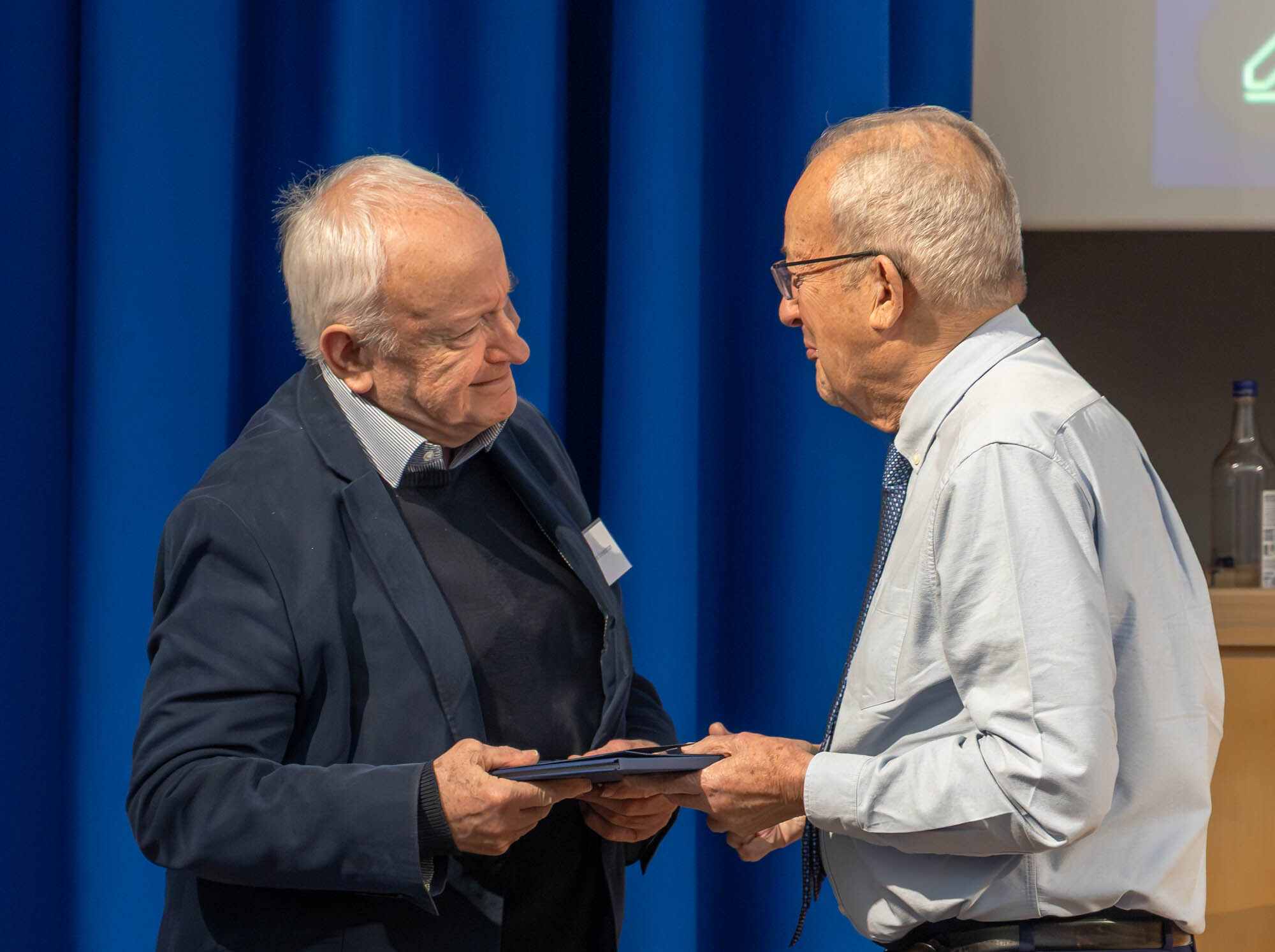
The Annual Roger Freedman Lecture was announced by Lord Sainsbury at a Symposium in Norwich in May 2025