PiperPlus on display at Science Museum
We're very excited to have our late blight resistant potatoes on display at the Science Museum in London. PiperPlus researchers, Agnieszka Witek and Jonathan Jones, were invited to attend the launch of the new, free Future of Food exhibition which will be open until 4 Jan 2026.
By Laura Turchi and Mia Cerfonteyn
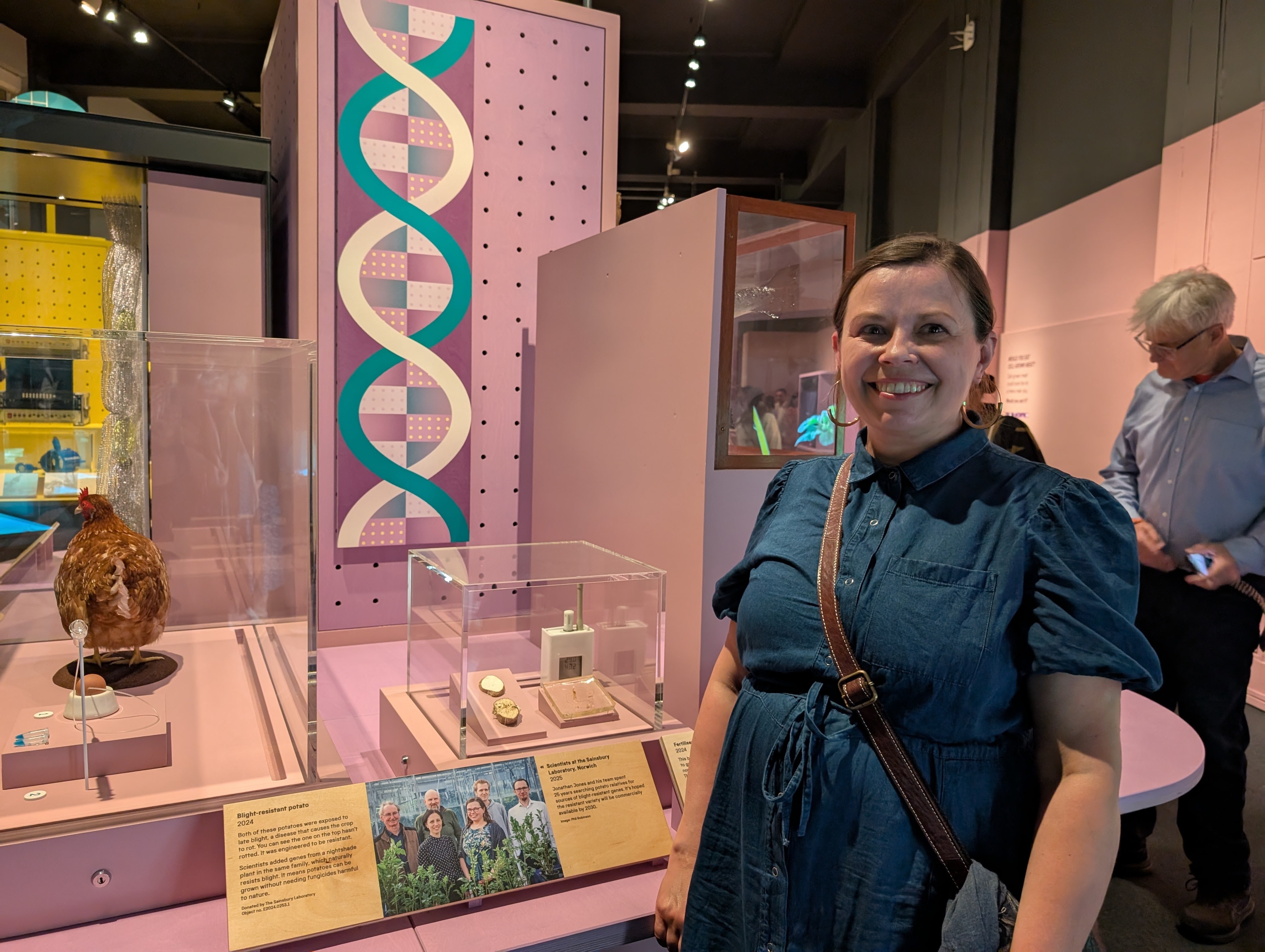
A PiperPlus potato is now showcased next to a non-resistant Maris Piper one at the Science Museum in London, to illustrate how modern technologies can help make agriculture more sustainable. Agnieszka Witek, who is a lead researcher in the project, helped to prepare the freeze dried samples on display.
Last week, Future of Food, a major new exhibition examining how science can help us find more sustainable ways to grow and produce food, opened at the popular Science Museum in London.
The free exhibition invites visitors to explore potential routes to a more sustainable future of food. It reveals some of the scientific ideas, from cellular agriculture to agroecology, that could support sustainable food production. Visitors can explore how exciting developments in biotechnology could transform how food is produced, creating more planet-friendly and climate-adapted alternatives to animal products and crops.
Our disease-resistant potato, PiperPlus, uses genes rather than pesticides to combat late blight disease - a perfect fit for this display.
Potatoes are a staple food in the UK and worldwide, but many commercial varieties in the UK are very reliant on pesticides to prevent pathogen attack, which isn't sustainable.
Based on decades of research carried out in the Jonathan Jones's group at The Sainsbury Laboratory, the PiperPlus potato was developed using late blight resistance genes discovered in wild relatives of potato. When you add these genes to a popular commercial variety like Maris Piper (which has no resistance to late blight), you end up with a potato plant that is completely immune to the late blight pathogen - this novel variety is called PiperPlus.
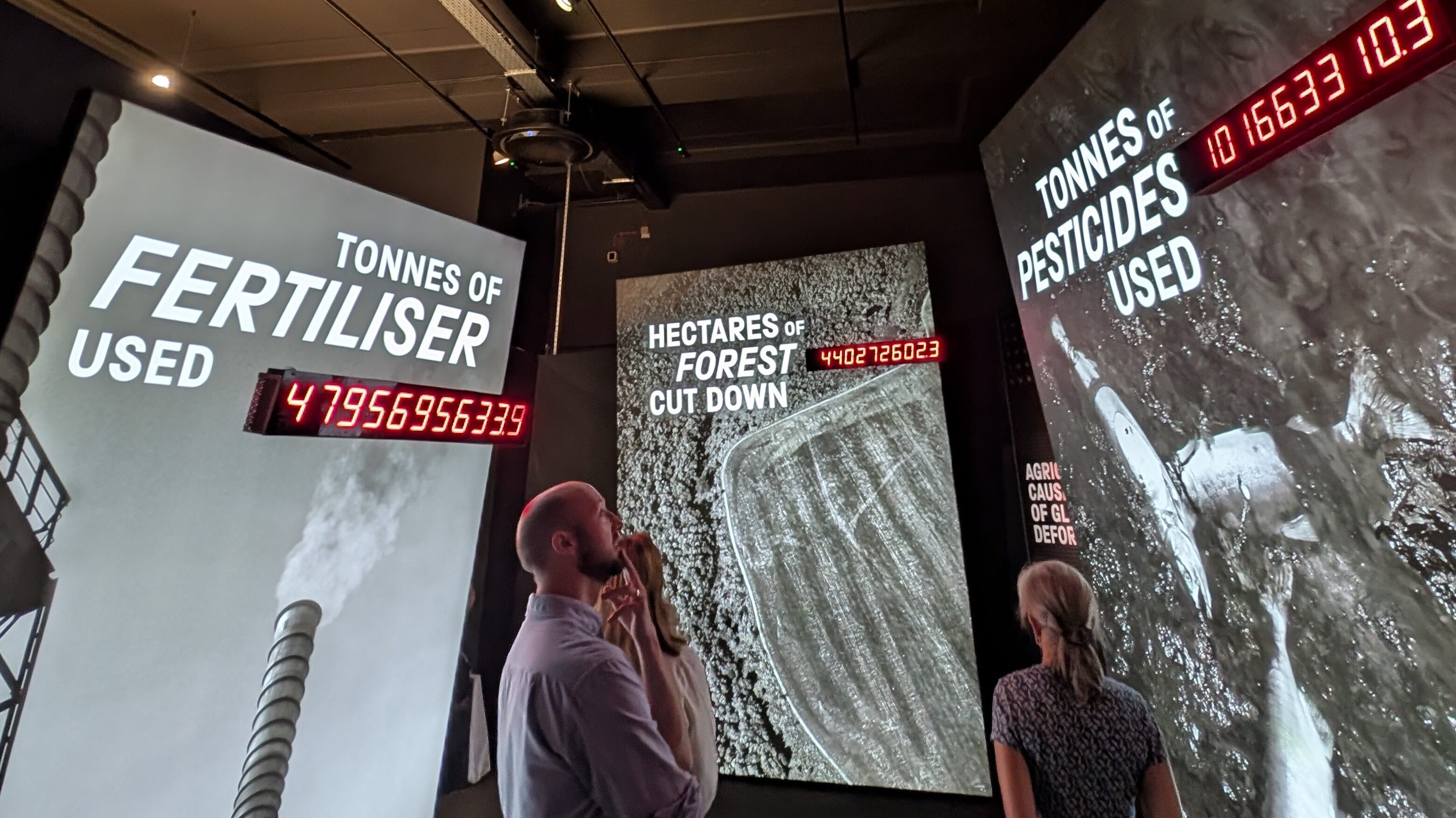
Imposing walls show a live count of the tonnes of pesticides and fertilisers used in global agriculture, as well as the hectares of forest cut down. This powerful display is part of the Future of Food exhibition to remind viewers of the ongoing effect of agricultural practices on our planet.
Jonathan Jones says "Agnieszka Witek and I were delighted to be able to attend the opening of the Science Museum’s excellent Future of Food exhibition on 24th July. It’s a fascinating and instructive depiction of the history of agriculture, ranging from early crop domestication to modern crop improvement and agronomic methods. And of course, it was a great thrill to see the display of some of our work equipping potato with extra disease resistance genes."
Agnieszka says "I feel honoured that the Science Museum invited us to showcase our work, and to add our voice to the strong message of concern and hope for sustainable and safe future of food."
Our researchers personally prepared the potato samples displayed in the exhibition. After infection, traditional Maris Piper and PiperPlus potatoes were sliced and freeze-dried for 72h prior to transportation from The Sainsbury Laboratory in Norwich to the Science Museum in London. Potato samples are now kept in a controlled environment with low humidity and stable temperature, which allows them to be preserved for a long time.
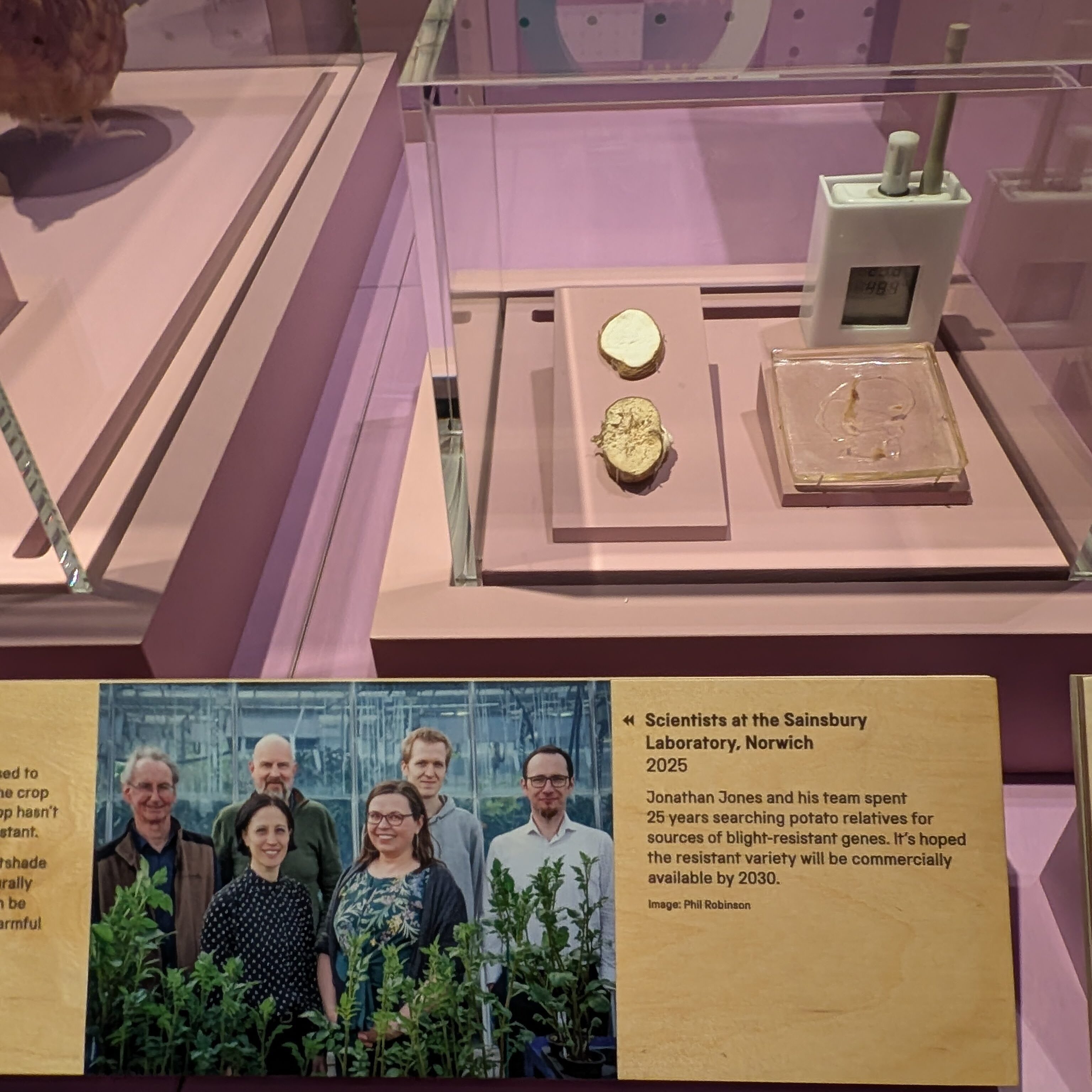
PiperPlus and non-resistant Maris Piper potatoes on display at the Future of Food exhibition along with the scientists who helped create it.
About the Science Museum
The Science Museum is part of the Science Museum Group, the world’s leading group of science museums that share a world-class collection providing an enduring record of scientific, technological and medical achievements from across the globe. Over the last century the Science Museum has grown in scale and scope, inspiring visitors with exhibitions covering topics as diverse as robots, codebreaking, cosmonauts and superbugs. The Science Museum was named a winner of the prestigious Art Fund Museum of the Year prize for 2020.