Precision Breeding Regulations Now Live
On the 13th of November 2025, UK regulations for precision bred plants came into effect, and applications are now open to register precision bred plants, such as those with enhanced disease resistance and reduced reliance on fungicides.
By Laura Turchi and Mia Cerfonteyn
“This is a milestone for UK science and innovation." says Professor Sophien Kamoun FRS, Group Leader at The Sainsbury Laboratory, "A decade after we first applied CRISPR/Cas to plants, we now have the regulatory framework to translate discovery into impact — improving crops, strengthening food security, and benefiting society.”
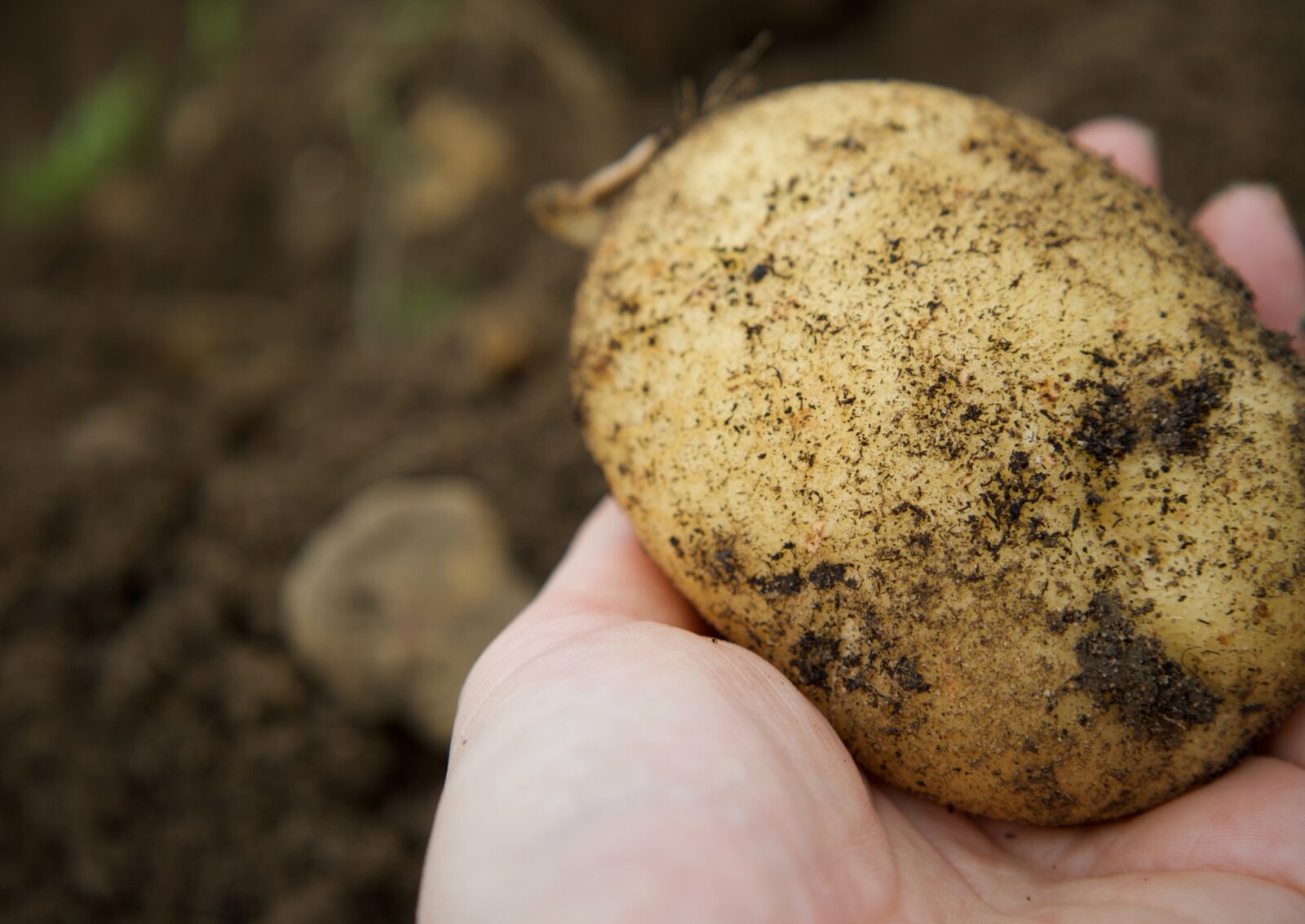
A potato that can defend itself against disease.
These regulations are part of implementing the Precision Breeding Act 2023 in England, which concerns plants developed using biotechnology to make genetic changes that could also occur naturally or through conventional breeding. This includes small changes in the genetic sequence (e.g. gene editing) of a plant or adding genes from close plant relatives that could have been added with conventional breeding methods (e.g. cisgenics).
Small changes can have big effects - changing just a few genes can make a plant resistant to pathogens, reducing reliance on fungicides to keep disease under control.
For example, powdery mildew disease is one of the main reasons why British tomato growers spray fungicides on their crops. By removing a gene that makes tomatoes susceptible to powdery mildew, researchers at The Sainsbury Laboratory were able to develop a new resistant variety, the Tomelo, in a single step. Sophien Kamoun and his team made the technological pipeline publicly available, allowing plant breeders from all over the world to access and further develop this approach.
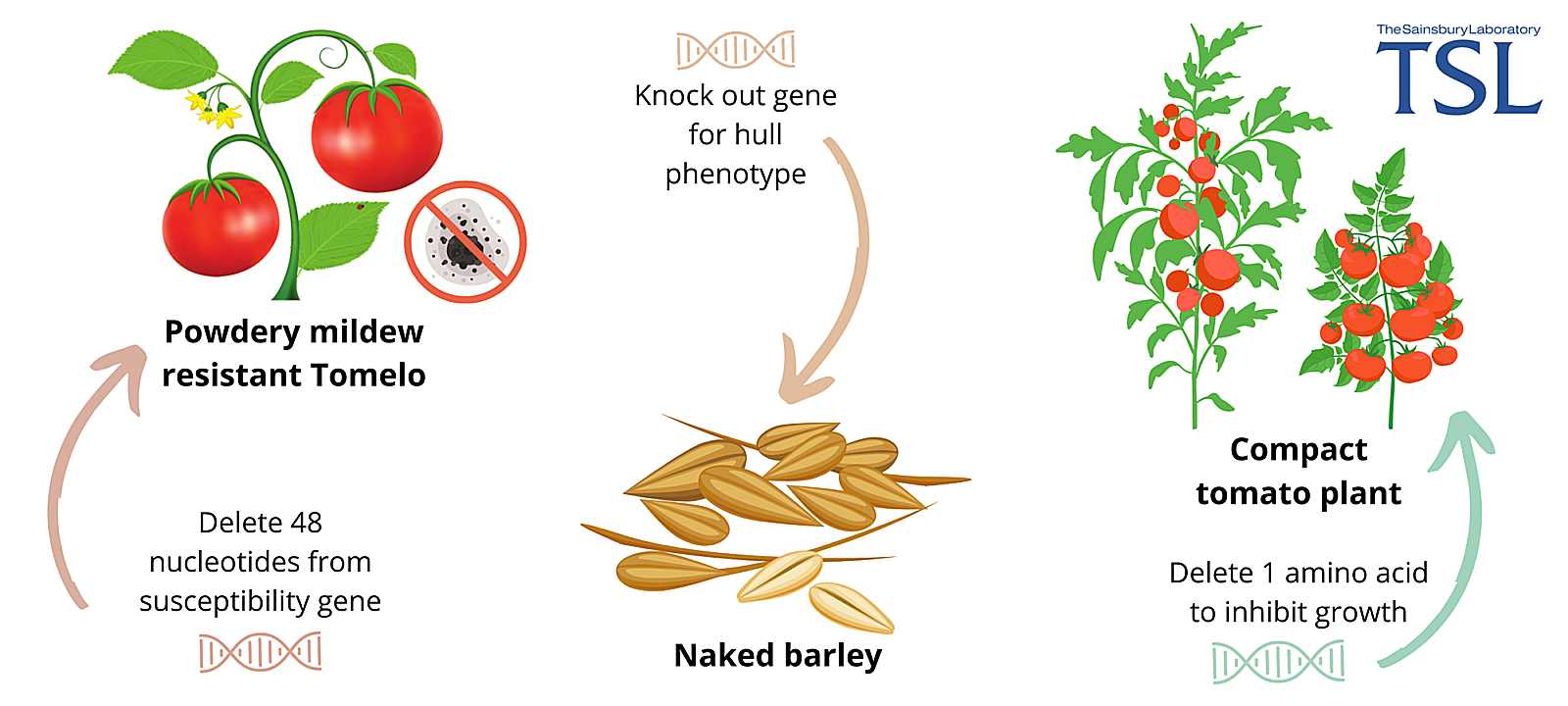
Examples of how TSL scientists have used gene editing to improve crop traits.
At TSL, we operate on the principle that it is better to protect crops with biology rather than chemistry.
Based on 25 years of research, the Jonathan Jones group has found three resistance genes that can protect potato from late blight, a disease caused by Phytophthora infestans, and two more that protect it from Potato Virus Y (PVY) and Potato Leaf Roll Virus (PLRV).
As part of the PotatoPlus project, the team introduced these genes into UK-favoured potato varieties such as Maris Piper, resulting in a disease resistant PiperPlus variety with the same excellent taste and yield.
If made available to growers, the impact on farming could be dramatic:
- The potato plants will be completely resistant to all the late blight races currently circulating in the UK, reducing the need to spray for late blight control (though some sprays may still be needed against early blight, a different disease).
- Their resistance to PVY and PLRV will mean it will be much easier to produce seed potatoes in England, with fewer insecticides applied to restrict PVY and PLRV transmission by aphids.
- Aphids are more prevalent in warmer climates; for this reason, British seed potatoes are usually produced in Scotland. However, over half of the GB potatoes are grown in East Anglia and Yorkshire. Virus-resistant lines will enable seed potato production in England.
“If you have a potato that is inherently resistant to disease and shows reduced post-harvest losses, which will need less pesticides – to me, that’s obviously a good thing.” - Professor Jonathan Jones
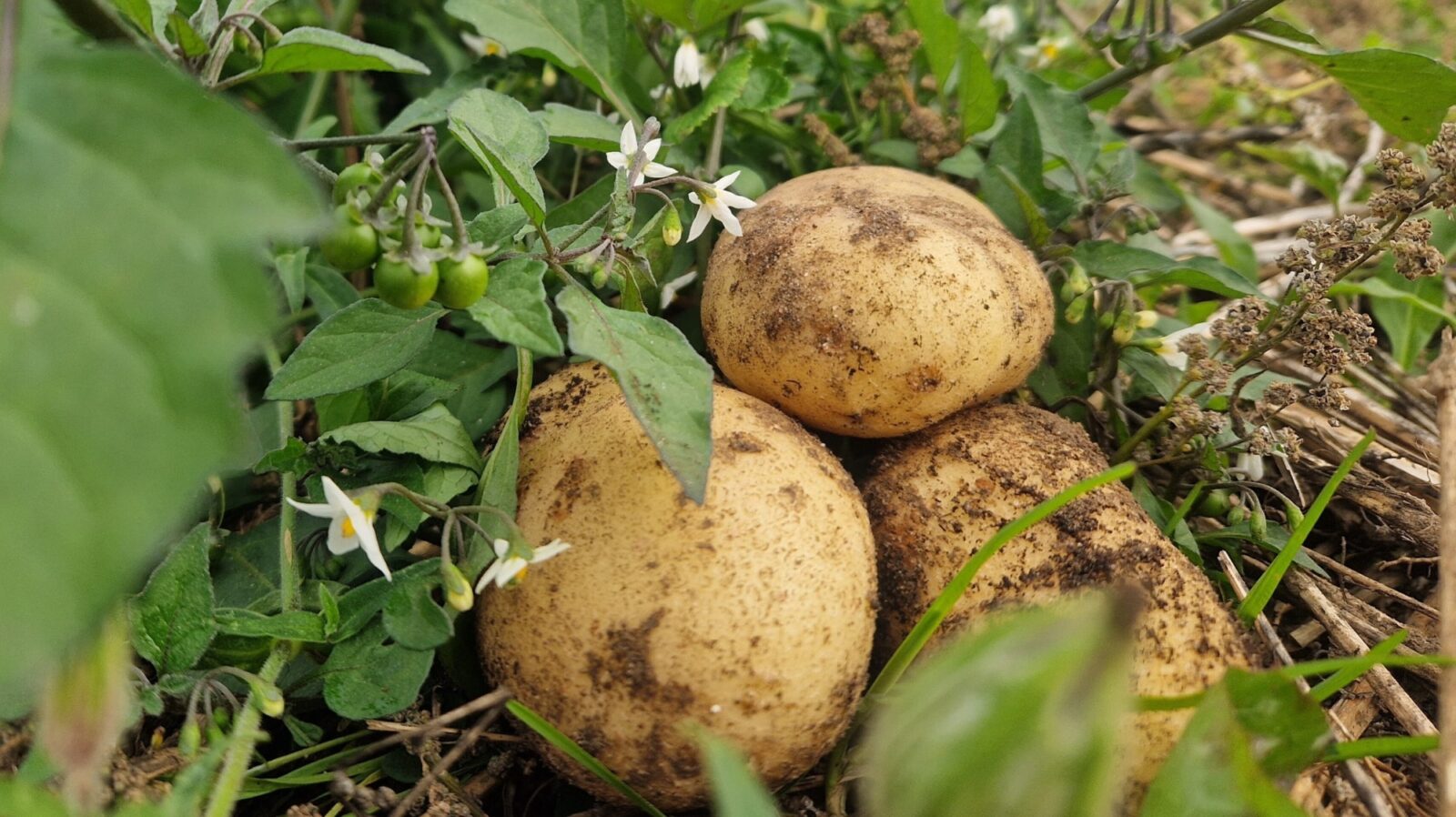
Freshly dug up PotatoPlus tubers from our field trial next to their wild relative and neighbour, Solanum nigrum (pictured).
The new resistant varieties will be brought to market in England by our commercial partners BioPotatoes, and the opening of applications for precision bred plants is a significant step in the journey to obtain approval under the PBA.
Dr Agnieszka Witek, Postdoctoral Researcher in the Jones group, says: “The regulations coming into force open a long-awaited clear path to farm and market for projects like PotatoPlus. A happy day for us and we're looking forward to applying soon!”