2Blades Soybean Research Wins Major BBSRC Grant
2Blades Awarded BBSRC Grant to Advance Novel Plant Immune Mechanisms Against Soybean Rust
The 2Blades Group at The Sainsbury Laboratory, in partnership with Bayer, has been awarded an Industrial Partnership Award (IPA) from the UK’s Biotechnology and Biological Sciences Research Council (BBSRC). The award will provide £860,000 over three years as 2Blades leads a pioneering research project aimed at delivering durable resistance to Soybean Rust (SBR), one of the world’s most devastating crop diseases.
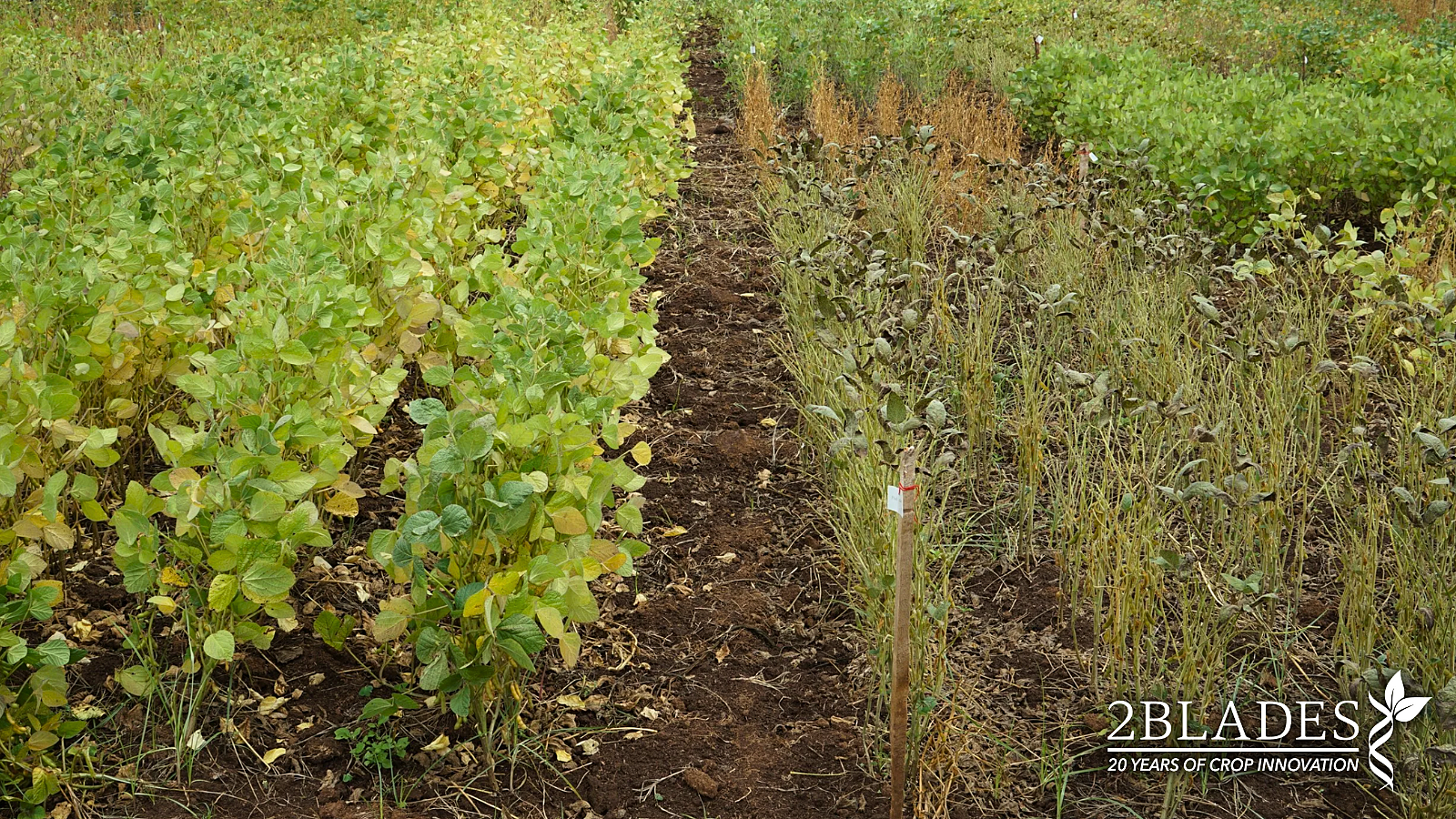
Soybean plants infected with Soybean Rust, showcasing a resistant variety (L) and susceptible variety (R). Photo credit: 2Blades.
The three-year project, “Novel Mechanism-of-Action (NMoA) Genes: A Pathway to Durable Soybean Rust Resistance,” will advance the discovery of new plant immune mechanisms that protect soybean crops against Phakopsora pachyrhizi, the pathogen responsible for SBR. This airborne fungal disease can destroy up to 90% of a soybean crop within as little as three weeks of infection, threatening global food security and farmers’ livelihoods.
A New Path to Durable Resistance
Conventional methods for combating Soybean Rust, including fungicides and traditional breeding, provide partial protection but come with significant limitations. Chemical treatments are costly and raise concerns about their potential impacts on human health and the environment, while the pathogen is rapidly adapting and developing tolerance to these controls. At the same time, the existing resistance genes in soybean have been overcome by emerging pathogen races.
To address these challenges, 2Blades aims to characterize a NMoA gene pair discovered in wild relatives of soybean (Glycine sp.) that exhibits immunity to SBR. When introduced into cultivated soybean, these genes have the potential to confer robust and durable resistance to the pathogen.
The project aims to:
- Characterize the diversity of NMoA-related sequences across plant species;
- Identify interactions among the regulatory, signaling, and pathogen effector proteins;
- Determine how this immune response function in plant cells; and
- Explore genome editing strategies to unlock disease resistance potential from related NMoA genes in soybean.
By elucidating this new defense pathway, the research seeks to enable durable and sustainable solutions to SBR, reduce reliance on chemical treatments, and improve crop resilience worldwide.
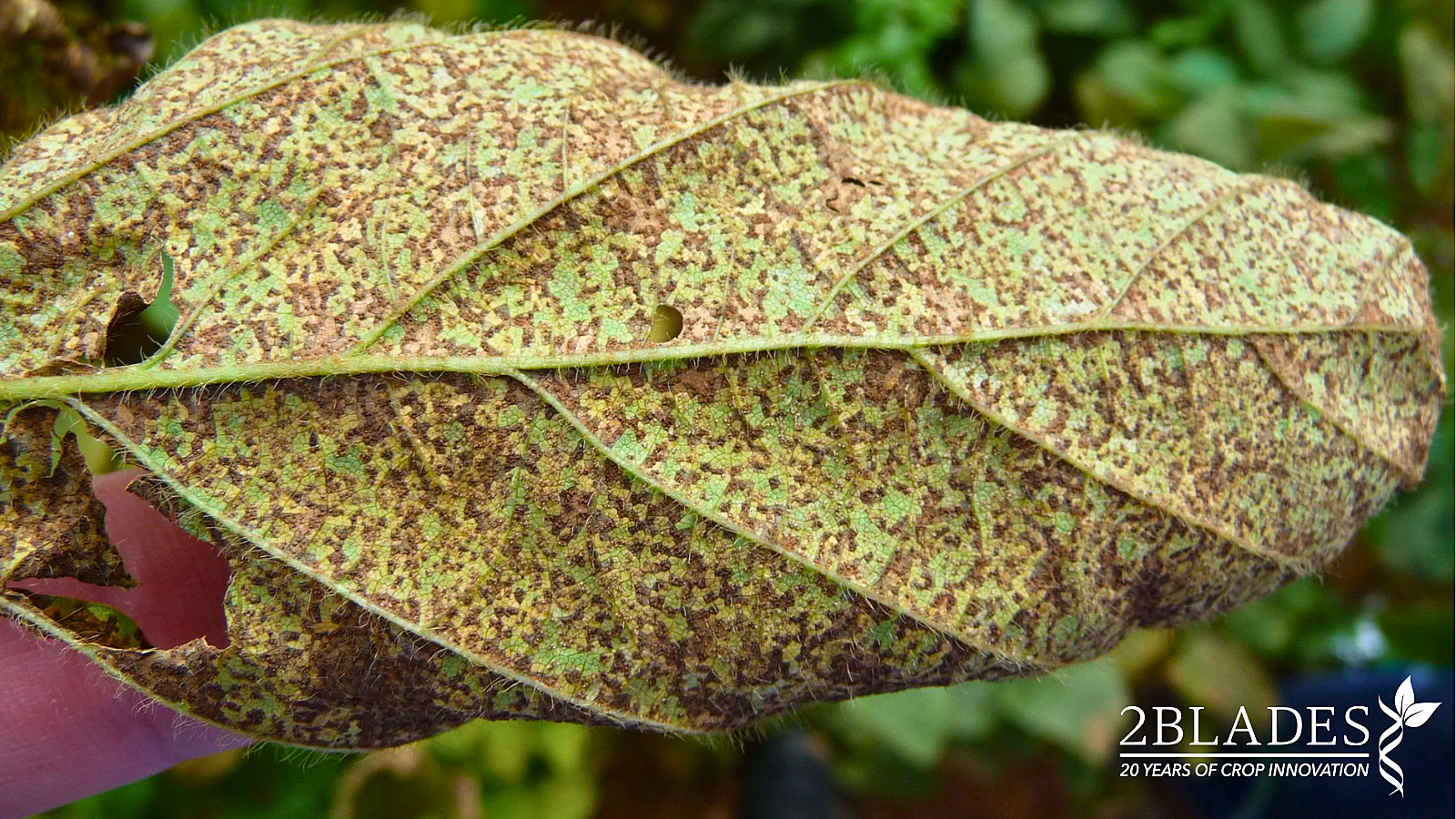
Soybean plant infected with Soybean Rust. Credit: 2Blades
Collaboration and Global Impact
The project brings together 2Blades and Bayer, a multinational life sciences company whose Crop Science Division is applying the findings to commercial soybean breeding. Bayer’s efforts will focus on developing improved soybean varieties for growers in South America, while 2Blades will adapt the innovation for deployment among smallholder farmers in Africa, enhancing agricultural productivity through equitable access to advanced crop technologies.
This work builds on 2Blades’ long-standing partnership with Bayer, which has already produced major advances in developing soybean rust resistance through earlier collaborative research. The new BBSRC-supported project strengthens this collaboration, expanding the scientific foundation for durable, sustainable solutions to one of the world’s most damaging crop diseases.
PROF Kamil Witek, 2blades group leader
“This project marks a major step forward in understanding how plants defend themselves against rapidly evolving pathogens. By uncovering and applying new immune mechanisms, we can help deliver soybean varieties with long-lasting resistance, improving productivity for both commercial growers and smallholder farmers worldwide.”