A tomato MIK2-clade receptor is involved in the perception of a Fusarium-derived elicitor
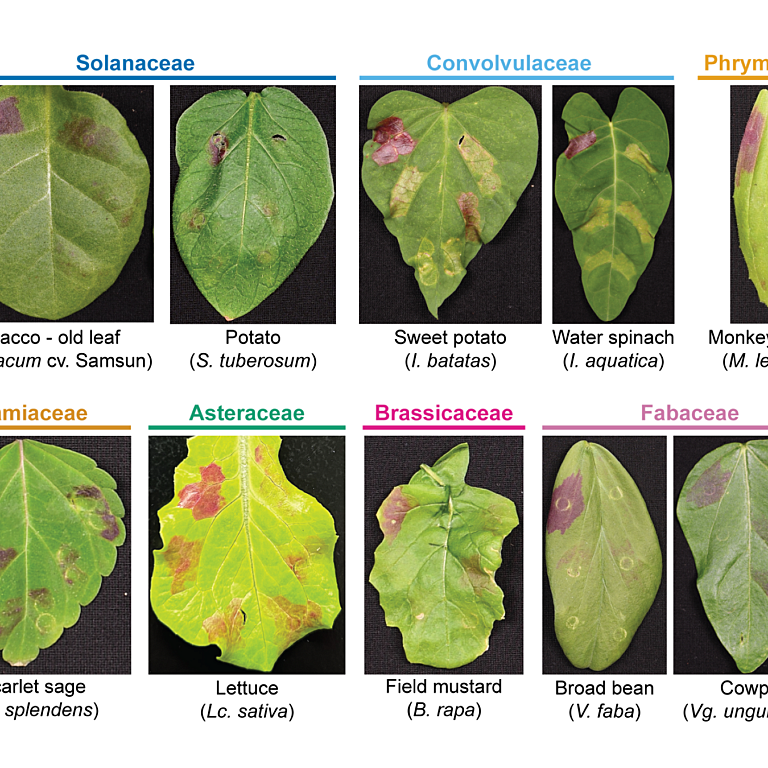
Plants continuously monitor their environment to adapt to threats affecting health and fitness. Cell-surface receptors detect conserved microbe-associated molecular patterns (MAMPs) or endogenous immunogenic signals to activate signaling pathways that induce broad-spectrum disease resistance, known as pattern-triggered immunity (PTI). In Arabidopsis thaliana, the leucine-rich repeat receptor kinase MIK2 emerged as a versatile receptor involved in perceiving endogenous SCOOP peptides as well as potential MAMPs derived from Fusarium and related fungi. While SCOOP perception appears restricted to Brassicales, the Fusarium-derived elicitor triggers PTI responses across different plant lineages. Here, we demonstrate that Fusarium elicitor responsiveness and MIK2-clade proteins are conserved among seed plants. We identified a tomato MIK2-clade receptor that shares AtMIK2 properties in perceiving the Fusarium elicitor, but not SCOOPs. Tomato mutants lacking the receptor show compromised PTI responses to the fungal elicitor and increased susceptibility to Fusarium oxysporum. By integrating AI-assisted structural prediction with experimental data, we identify conserved and variable residues in Arabidopsis and tomato MIK2-clade receptors that may underlie shared and lineage-specific recognition specificities. Together, these findings establish MIK2-clade receptors as immune surveillance modules that have undergone lineage-specific diversification, supporting a model in which endogenous danger perception might have evolved from an ancestral role in microbial pattern recognition.