TSL's Disease-Resistant Potato Approved as Precision Bred
UK's first precision bred potato approved, bringing disease-resistant Maris Piper a step closer to farmers.
Landmark regulatory approval paves the way for a Maris Piper which has the biological capability to resist late blight and potato viruses, thus dramatically reducing the need for chemical control.
Decades of fundamental research into disease resistance genes by the Jonathan Jones Group at The Sainsbury Laboratory (TSL) have now resulted in the first precision bred potato to receive marketing notice approval under the UK's Precision Breeding regulatory framework.
This disease-resistant Maris Piper, named ‘PiperPlus’ by Professor Jonathan Jones and his team, has innate immunity against potato late blight, the disease responsible for the Irish Potato Famine, and to Potato Virus Y (PVY) and Potato Leafroll Virus (PLRV) - three of the most damaging diseases affecting potato production today.
Following a rigorous scientific assessment by the Advisory Committee on Releases to the Environment (ACRE), Defra has confirmed that the two new lines of PiperPlus meet the legal definition of a Precision Bred Organism (PBO) under the Genetic Technology (Precision Breeding) Act 2023.
Under the Precision Breeding Act, a plant qualifies as precision bred only if its genetic changes could have occurred naturally or through conventional breeding.
Professor Jonathan Jones FRS, Group Leader at The Sainsbury Laboratory, says:
“I’m delighted to see that after dedicated and extensive effort from my outstanding team of scientific colleagues at The Sainsbury Laboratory, supported by grants from BBSRC, we’ve identified two potato lines that have been approved by DEFRA for a marketing notice under the Precision Breeding Act.”
“It has also been extremely encouraging to see the EU catching up by introducing its own NGT1 regulatory framework. We believe PiperPlus will become a flagship example of what's possible through precision breeding, showing how these technologies can reduce fungicide use, improve sustainability, and deliver real benefits to the public."
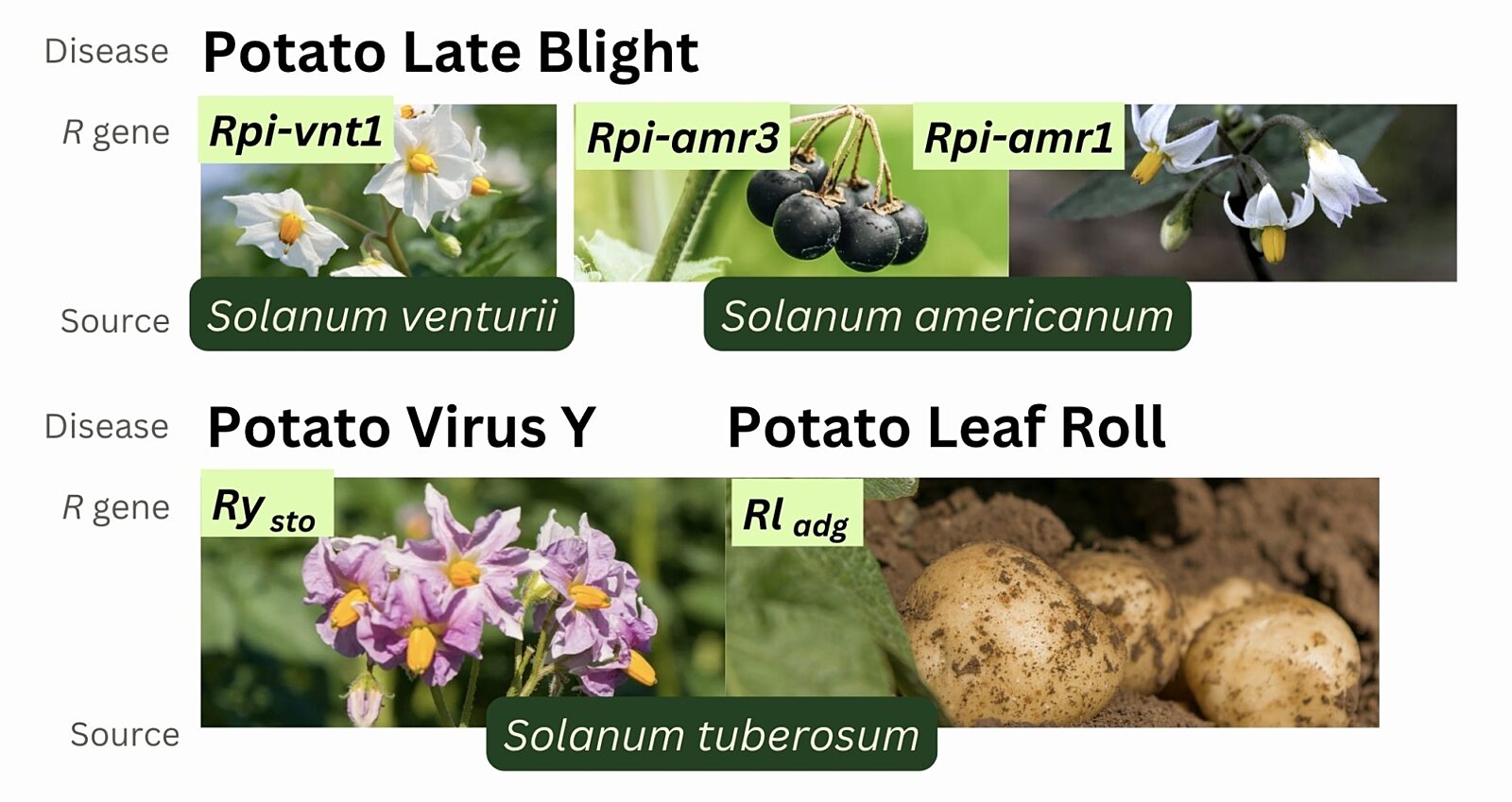
Rather than relying on chemical protection, the researchers strengthened Maris Piper's natural immune system by introducing resistance genes from potato’s wild relatives that encode for immune receptors that detect pathogen molecules and then activate defence.
Late blight remains one of the greatest challenges facing potato growers in the UK. Because most commercial potato varieties are susceptible to the pathogen Phytophthora infestans, farmers typically apply preventative fungicides throughout the growing season - often as many as 15 sprays each year. PiperPlus is designed to change that.
Reducing spraying could significantly lower production costs, reduce labour requirements, cut tractor journeys and carbon emissions, lessen soil compaction, and help protect beneficial soil fungi and microbiomes.
The added resistance to PVY and PLRV also offers broad benefits because viral load increases with each successive potato generation, leading to progressively more severe disease symptoms. This makes it essential that seed potatoes - the small tubers used to grow the next crop - do not carry viral infection.
Because virus pressure is generally much lower in cooler regions, most British seed potatoes are currently produced in Scotland. Virus-resistant varieties could enable more seed potato production to take place in England, reducing transport costs and associated carbon emissions. Since both PVY and PLRV are transmitted by aphids, the PiperPlus resistant variety could also reduce reliance on insecticide applications to control virus spread.
The approval by Defra demonstrates exactly the kind of innovation the Precision Breeding Act was designed to enable: delivering improved crops for the benefit of British farmers, consumers and the environment.
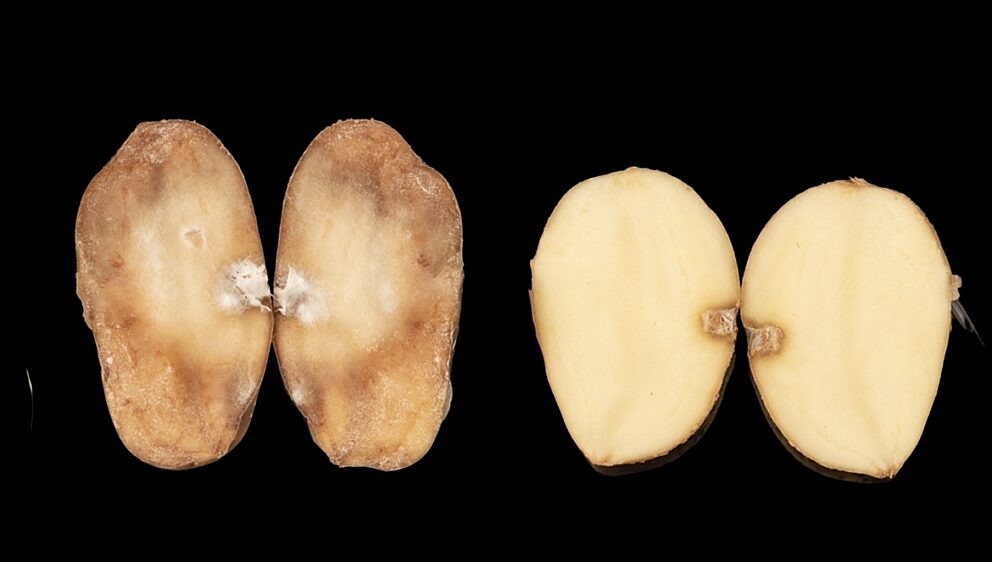
On the left is a susceptible Maris Piper tuber infected with the late blight pathogen Phytophthora infestans and on the right is a late blight resistant PiperPlus tuber. The inner notches indicate where the tubers were directly inoculated with the pathogen. The Rpi genes in PiperPlus allowed the plant cells to detect the pathogen and activate its immune system to effectively stop P. infestans from spreading and proliferating any further
The next step towards bringing this technology to market is to obtain regulatory approval from the Food Standards Agency (FSA). As part of this process, the FSA will review compositional and safety data demonstrating that the precision-bred potatoes are as safe to eat as the conventional Maris Piper potatoes currently available to consumers.
According to Prof. Jonathan Jones, bringing a new potato variety to market typically takes at least five years due to the time required for variety registration and approval for the National List of potato varieties and for the production of sufficient quantities of seed potatoes. While the Precision Breeding Act currently applies only to the cultivation of precision-bred crops in England – the products can be available to consumers across the UK.
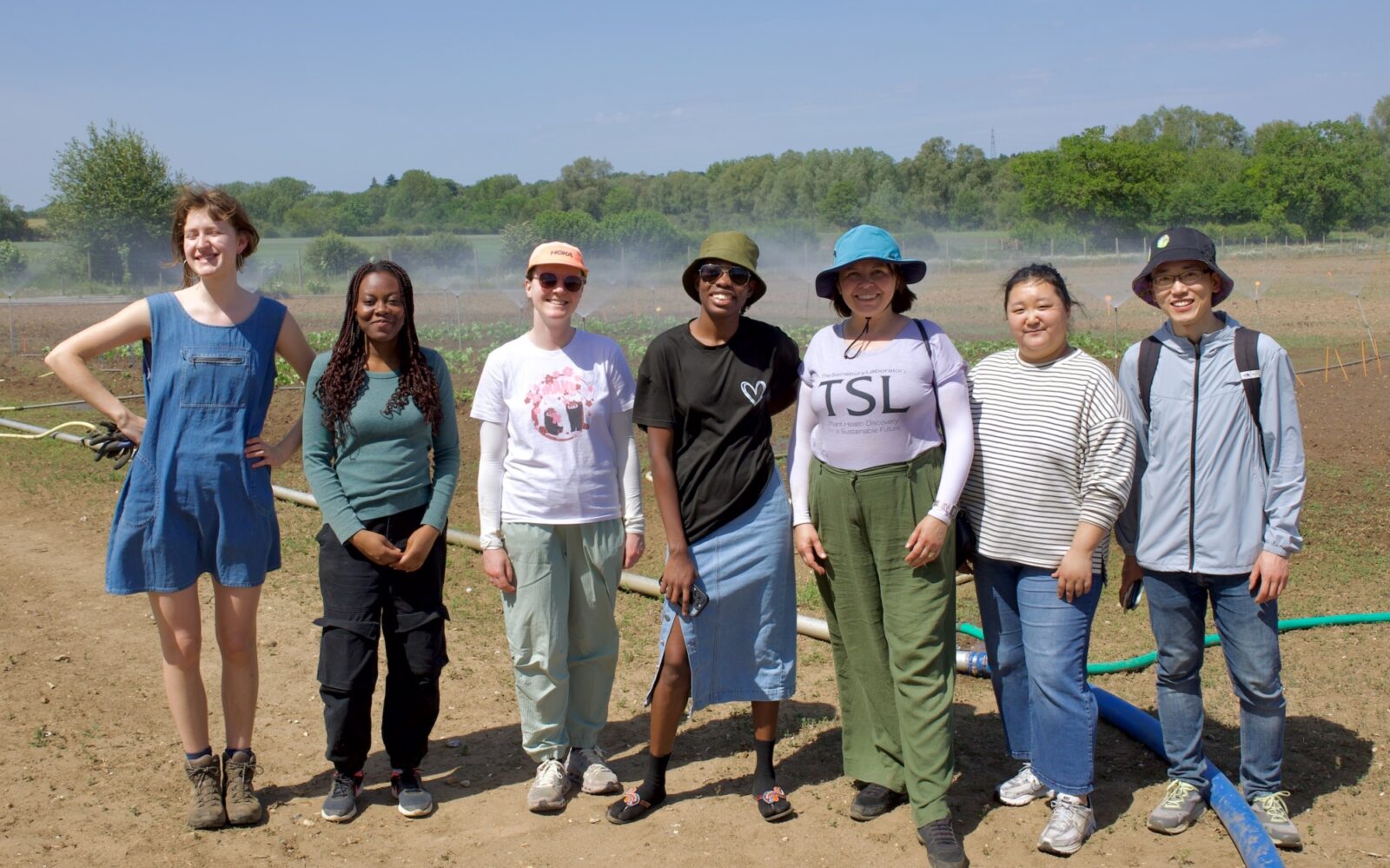
The amazing team of TSL staff and students who helped to plant disease resistant potato lines at our field trial earlier this year. Led by Dr. Agnieszka Witek (3rd from right)
For press and media enquiries, contact:
TSL Communications Manager - Mia.Cerfonteyn at tsl.ac.uk
PiperPlus Project Lead - Jonathan.Jones at tsl.ac.uk
Supporting information
On 3 July 2026, Defra published the official Precision Bred Organism marketing notice (Reference PBM/25/SOTU/002
The progress reported here builds on decades of support from BBSRC for discovery research in the Jones lab, which enabled the identification of the resistance genes underpinning PiperPlus. This foundational research is now being translated towards application through continued support from a BBSRC Follow-on Fund grant (link).
The project is advancing as a partnership between The Sainsbury Laboratory (TSL) and Biopotatoes Ltd. TSL is a shareholder in BioPotatoes Ltd (biopotatoes.com) through the TSL Ventures program.
About The Sainsbury Laboratory
The Sainsbury Laboratory (tsl.ac.uk) is an independent research institute advancing plant health for a sustainable future, making fundamental discoveries in molecular plant–microbe interactions and applying them to reduce crop losses caused by plant diseases, particularly in low-income countries. Located on the Norwich Research Park in the United Kingdom, it hosts around 120 staff and students and, since its establishment in 1987, has been generously supported by the Gatsby Charitable Foundation and the University of East Anglia, while also securing competitive grants from the BBSRC, the European Research Council (ERC), and other research bodies, with some programmes funded by commercial companies. The Laboratory is committed to the highest standards of fundamental and applied research, reflected in the fact that four current Group Leaders are Fellows of the Royal Society, its researchers have won multiple prestigious ERC grants, and it is consistently represented among the Highly Cited Researchers list of the top 1% of scientists worldwide. In 2025, Jonathan Jones was awarded the Wolf Prize for Agriculture.