Sophien Kamoun Awarded Prestigious Gili Agostinelli International Prize
The Sainsbury Laboratory is delighted to announce that Professor Sophien Kamoun FRS has been awarded the 2026 international Gili Agostinelli Prize for Biological or Medical Sciences by the Turin Academy of Sciences in Italy. This recognition honours Sophien’s pioneering contributions to plant immunity genomics and plant–pathogen interactions, and their far-reaching impact on agriculture and global food security.
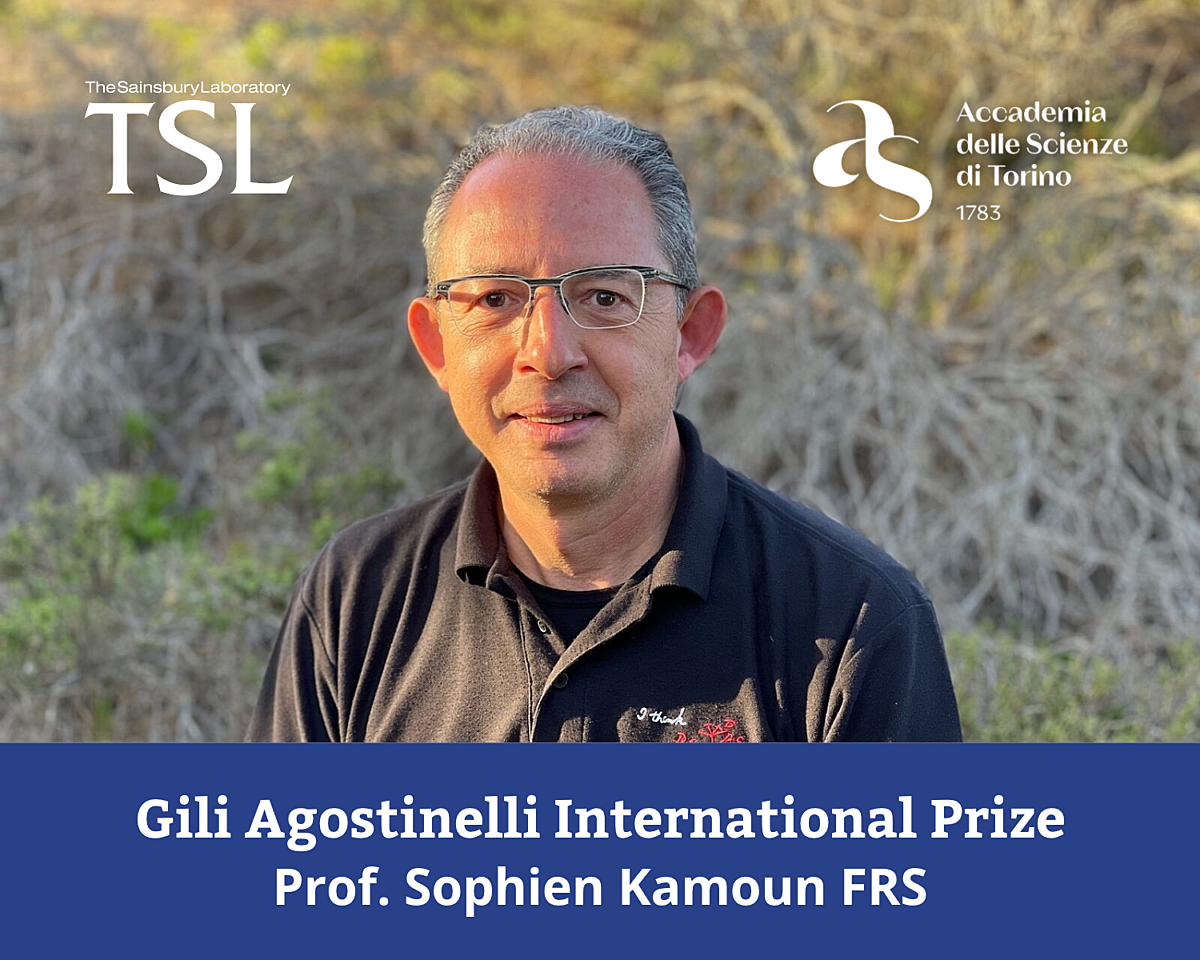
Presented during the inauguration of the Academy’s 244th academic year, the prize was formally conferred at a ceremony in Turin on 11 November 2026, hosted by Academy President Professor Marco Mezzalama. In its official citation, the Academy noted that Sophien is "widely regarded as one of the world’s most influential and renowned plant biologists", ranking in the top 1% of researchers globally in his field and holding a position of pre-eminence in genomics applied to agriculture and plant–pathogen interactions.
Following the award presentation, Sophien delivered a public lecture entitled How to Trick a Plant Pathogen, exploring how fundamental discoveries in effector biology, immune receptor networks and resistosome structures are opening new frontiers for engineering disease-resistant crops. His visit to Turin and his team’s research on plant immunity were also featured on Italian national television in a report by Elena Cestino on RAI 3’s science programme TGR Leonardo on 12 November.
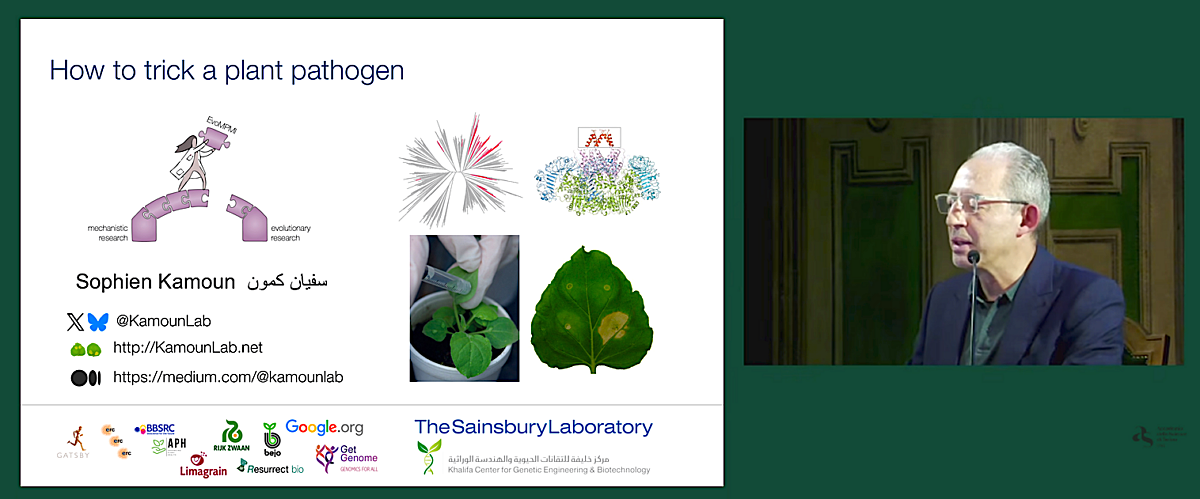
Sophien says: “I am deeply honoured to receive the Gili Agostinelli Prize from the Accademia delle Scienze di Torino, and to further strengthen the ties I share with the scientific community in Italy and in Turin in particular. This recognition belongs to the remarkable past and present members of my group and our many collaborators around the world, whose creativity and dedication drive our discoveries in plant immunity.”
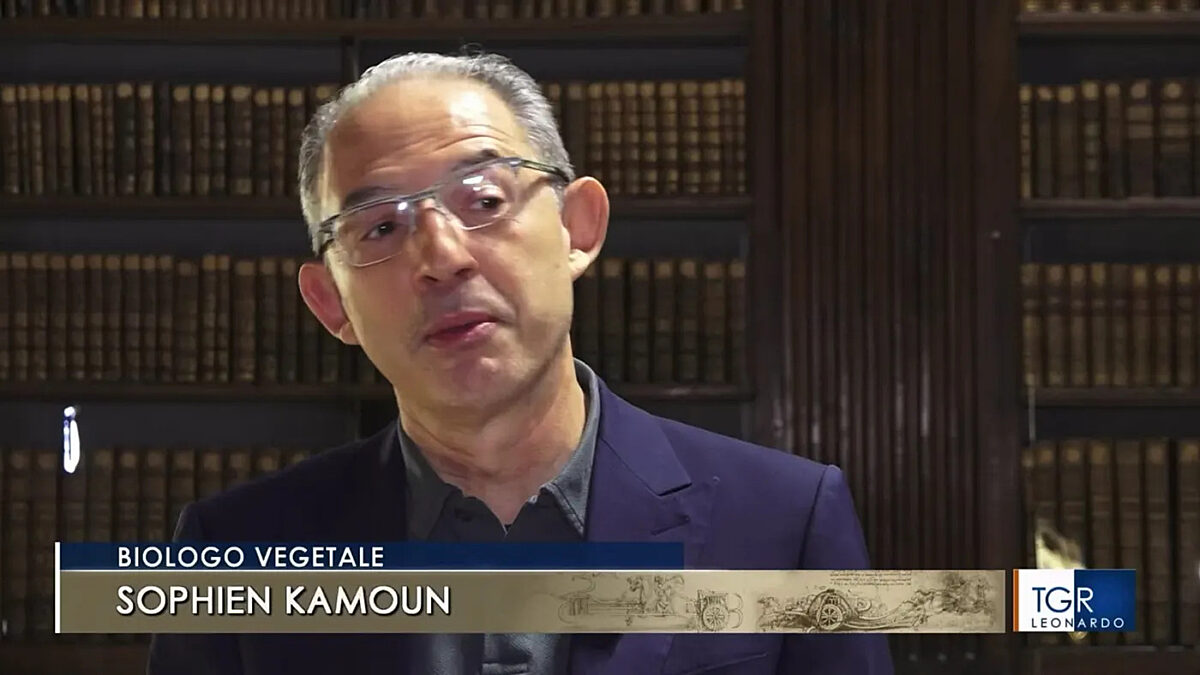
Sophien is a senior group leader at The Sainsbury Laboratory, as well as a Professor of Biology at the University of East Anglia, and a Fellow of the Royal Society. He is internationally recognised for his research on unravelling the coevolutionary arms race between plants and the microbes that attack them. Using genomics, evolutionary biology and structural biology, his research group has discovered major families of pathogen virulence effectors, including from Phytophthora infestans, the Irish potato famine pathogen, and revealed how intracellular NLR immune receptors operate in interconnected networks and assemble into oligomeric resistosome channels. Alongside fundamental breakthroughs, his lab’s discoveries have directly enabled translational crop-protection technologies, including the spinout company Resurrect Bio and synthetic immune receptors known as Pikobodies, while his open-science advocacy and initiatives such as GetGenome continue to expand genomics access worldwide.
Introducing Sophien at the Turin ceremony, Professor Paola Bonfante, Emeritus Professor of Plant Biology at the University of Turin and Fellow of the Academy, highlighted both the scientific and societal reach of his career: “His discoveries are not simply milestones in fundamental biology, they address one of the great challenges of our century: global food security in a changing environment. Sophien Kamoun is an exceptional recipient of the Gili Agostinelli International Prize. He perfectly shows how science is measured not only by discoveries and citations, but also by the knowledge we share, the people we inspire, and the benefits we bring to society.”
Professor Nick Talbot FRS, Executive Director of The Sainsbury Laboratory, says: “We are delighted that Sophien has been awarded the Gili Agostinelli International Prize by the Turin Academy of Sciences. This is a thoroughly deserved honour recognising Sophien’s extraordinary leadership in plant immunity and pathogen genomics. Throughout his career at TSL, he has shown how curiosity-driven fundamental science can translate into transformative solutions for global food security, while inspiring generations of researchers through his commitment to open science and international collaboration.”
Watch and read more
About the Gili Agostinelli Prize and the Turin Academy of Sciences
Founded in 1757 and formally established by royal decree in 1783, the Accademia delle Scienze di Torino is one of Italy’s oldest and most distinguished scientific academies. The international Premio Angiola Gili – Cataldo Agostinelli was established through a bequest by Academy Member Professor Cataldo Agostinelli in memory of himself and his wife Angiola Gili. Awarded annually to an eminent Italian or international scholar, the prize rotates across three fields: pure or applied mechanics and classical mathematical physics; applied mathematics to physical, natural or engineering sciences; and biological or medical sciences.
About The Sainsbury Laboratory
The Sainsbury Laboratory (tsl.ac.uk) is an independent research institute advancing plant health for a sustainable future, making fundamental discoveries in molecular plant–microbe interactions and applying them to reduce crop losses caused by plant diseases, particularly in low-income countries. Located on the Norwich Research Park in the United Kingdom, it hosts around 120 staff and students and, since its establishment in 1987, has been generously supported by the Gatsby Charitable Foundation and the University of East Anglia, while also securing competitive grants from the BBSRC, the European Research Council (ERC), and other research bodies, with some programmes funded by commercial companies. The Laboratory is committed to the highest standards of fundamental and applied research, reflected in the fact that four current Group Leaders are Fellows of the Royal Society, its researchers have won multiple prestigious ERC grants, and it is consistently represented among the Highly Cited Researchers list of the top 1% of scientists worldwide. In 2025, Jonathan Jones was awarded the Wolf Prize for Agriculture.