Surface immune signaling unlocks NLR activation through mRNA alternative splicing
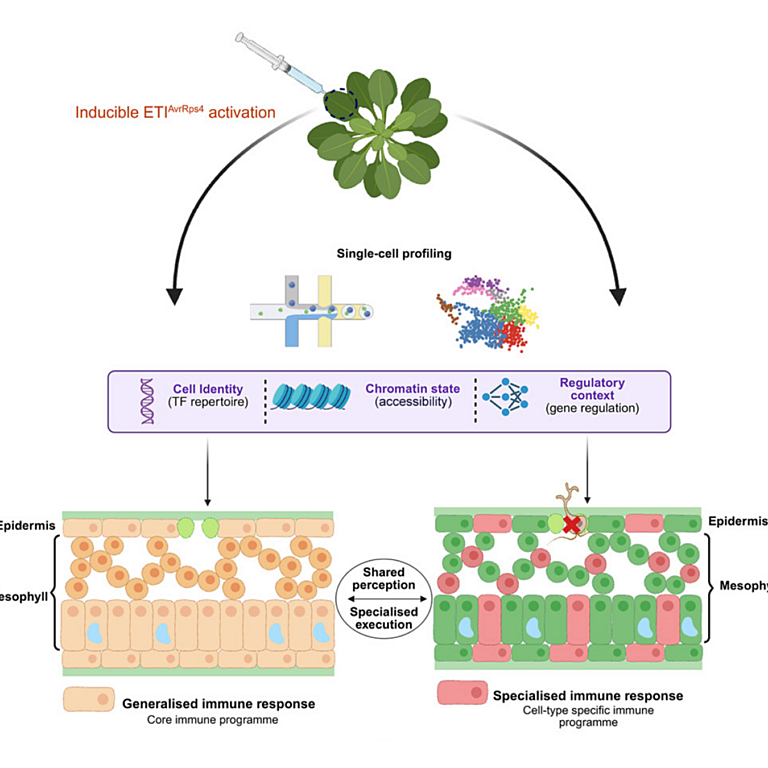
Plants activate pattern-triggered immunity (PTI) and effector-triggered immunity (ETI) to combat pathogens. However, how these systems coordinate immune activation while preventing autoimmunity remains poorly understood. In this study, we uncovered a regulatory mechanism in which surface immune signaling unlocks nucleotide-binding leucine-rich repeat (NLR) immune receptor activation through mRNA splicing. We identified an N-terminal prodomain in the potato late blight resistance protein Rpi-vnt1.1 that inhibits resistosome formation, preventing potential autoactivation of this NLR. Upon pathogen perception, PTI signaling induced alternative splicing of Rpi-vnt1.1 mRNA, removing this inhibitory element. This primed Rpi-vnt1.1 for activation by the Phytophthora infestans effector AVRvnt1, enabling resistosome assembly and immune signaling. The widespread conservation of N-terminal extensions in coiled coil-type NLRs points to a common regulatory mechanism in preventing potential autoactivation while preserving pathogen sensitivity.