Molecular insights into the production of extracellular vesicles by plants
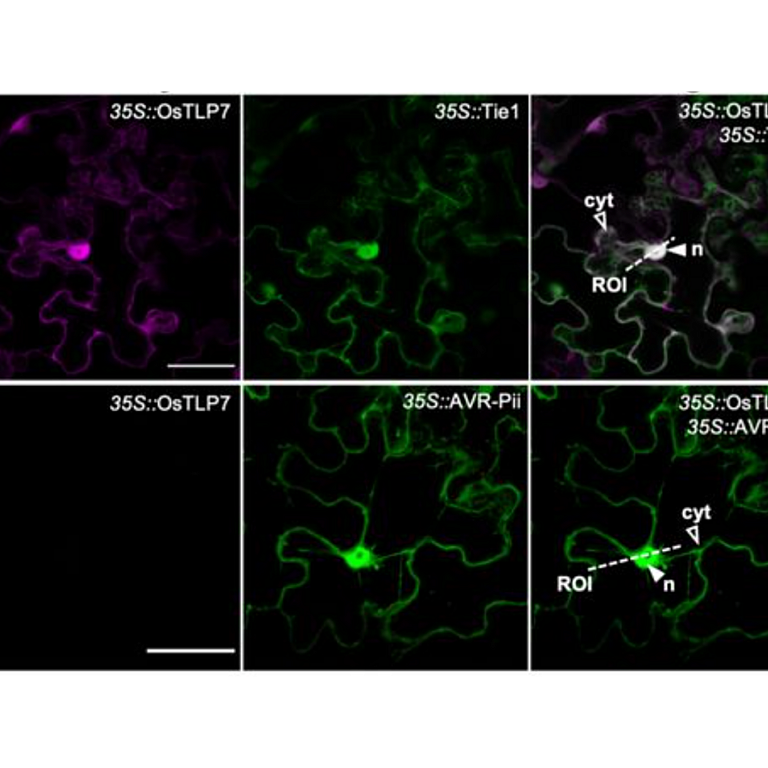
Extracellular vesicles (EVs) produced by Arabidopsis (Arabidopsis thaliana) plants are highly heterogeneous in protein content. To understand the origins of plant EV heterogeneity, we used an unbiased proximity labeling approach to identify proteins and pathways involved in the secretion of distinct EV subpopulations. Proximity labeling, co-immunoprecipitation, and fluorescence microscopy in Nicotiana benthamiana all indicated a general role in EV secretion for EXO70 proteins (a subunit of the exocyst complex) and the immune-related protein RPM1-INTERACTING PROTEIN4 (RIN4). To confirm these hypotheses, we assessed the impact of mutations in various EXO70 family genes and in RIN4 on EV release, as well as mutations in additional genes known to regulate endomembrane trafficking and secretion. Mutation of EXO70E1, EXO70E2 or STOMATAL CYTOKINESIS DEFECTIVE1 (SCD1; a GTP-exchange factor for RabE GTPases) reduced secretion of EVs marked by TETRASPANIN8 (TET8), PENETRATION1 (PEN1), and PATELLIN1 (PATL1), indicating that these proteins are generally required for EV secretion. In contrast, mutation of RIN4 reduced levels of TET8+ and PEN1+ EVs, but not PATL + EVs. Mutation of the small GTPase gene RABA2a specifically affected PEN1+ EV secretion, while mutations in AUTOPHAGY PROTEIN5 (ATG5) and VAMP-ASSOCIATED PROTEIN27 (VAP27) specifically affected TET8+ EV secretion. Lastly, we found that exo70 family mutants are more susceptible to infection with the fungal pathogen Colletotrichum higginsianum, underlining the importance of secretion for plant immunity. Together, our results unravel some of the complex mechanisms that give rise to EV subpopulations in plants.